Places that spark curiosity, thought and inspiration, for one person or for two. Pinned, pictured, and ordered by what they make you think.
Mexico City rewards the visitor who asks "what is under this?" more than the one who asks "what is the best?". The city stands on a drained lake, so every layer stays visible: a Mexica temple beside a cathedral beside a 1960s housing block. This guide picks places where that layering, or one person's obsession, makes you think.
Each entry carries a tag: Alone means the place is better in silence or at your own pace; Together means it gains from a second pair of eyes or from talking afterwards; most are Either. The buttons at the top filter by it.
The small line under each name says whether to book and which neighbourhood it is in. Cost appears only when it changes the plan: a slot that sells out, a private visit that opens a door, a cash-only counter.
Every pin on the map is coloured by section. Click a pin to read, or "Show on map" on a card to find it.
What money is for here: it buys time and access, not status. The two most expensive things in this guide are a tasting menu in Polanco and a private visit to a Barragán house. The two best free things are a public library and a lava field. Spend on what removes friction, such as a car to Teotihuacan at 6 a.m. or a booked slot at Casa Azul, and never on a thing because its price is high.
Pacing: the city sits at 2,240 m and the light is harsh by 11 a.m. One serious place in the morning, a late long lunch, one light place after four, and an evening with a plan. Two serious places in a day is the most that leaves room to think.
Light and silence
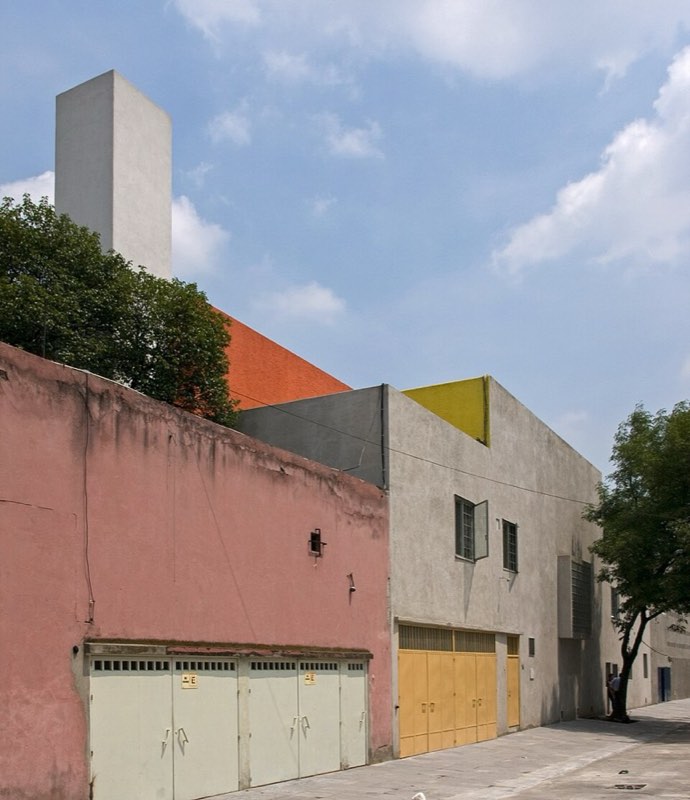
Luis Barragán built rooms that make people stop talking, and the city now lets you into six of them. Book the first two before you book flights. His collaborator Mathias Goeritz called the idea "emotional architecture": a building should move you the way music does, not explain itself.
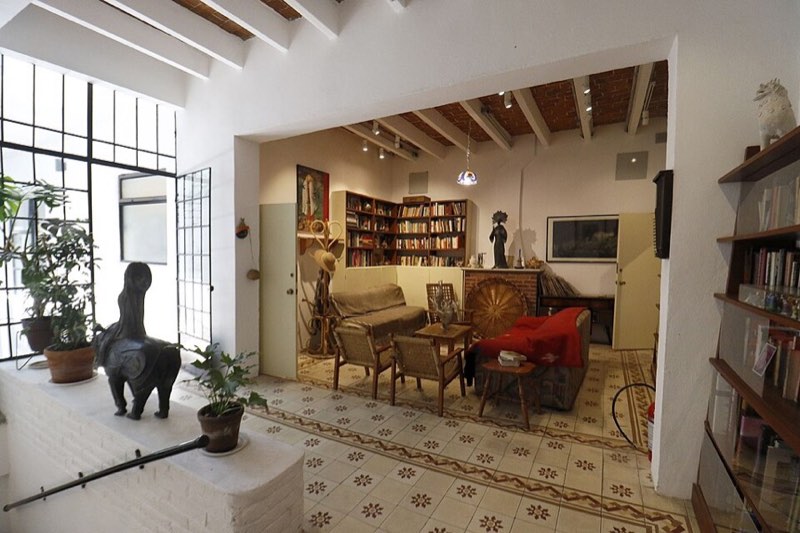
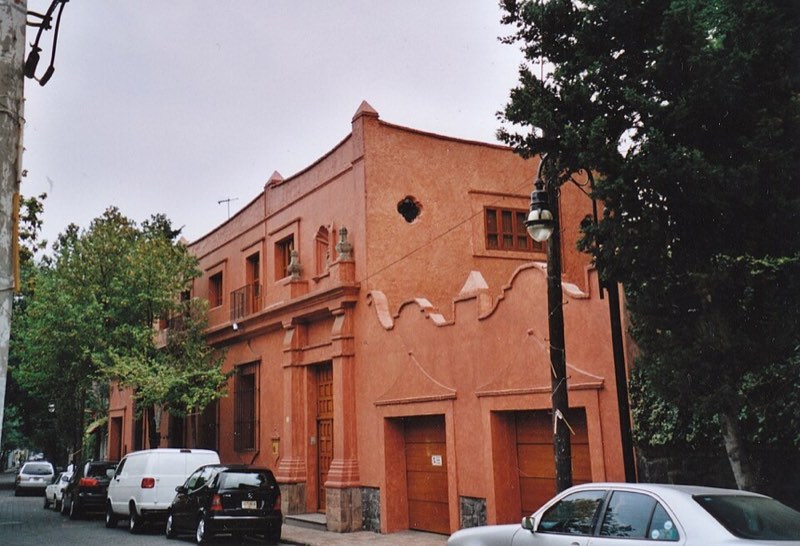
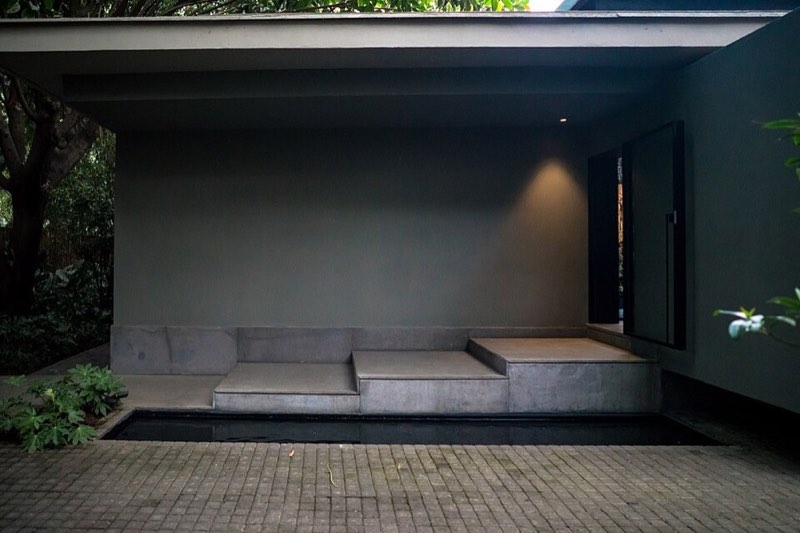
The house he built for himself in 1948 and died in forty years later, now a UNESCO site. Visits are small guided groups; tickets go on sale on the house's own site and sell out well ahead. What to watch for: a wall placed so afternoon light lands in one corner, a window that frames only a tree, a roof terrace whose walls frame only sky. Casa Ortega next door, his earlier house with the garden he kept, opens on some days by arrangement; ask when you book.
Alone, hang back from the guide and let the group move on. Together, walk afterwards to the Mercado de Tacubaya or Parque Lira and compare which room each of you would keep.
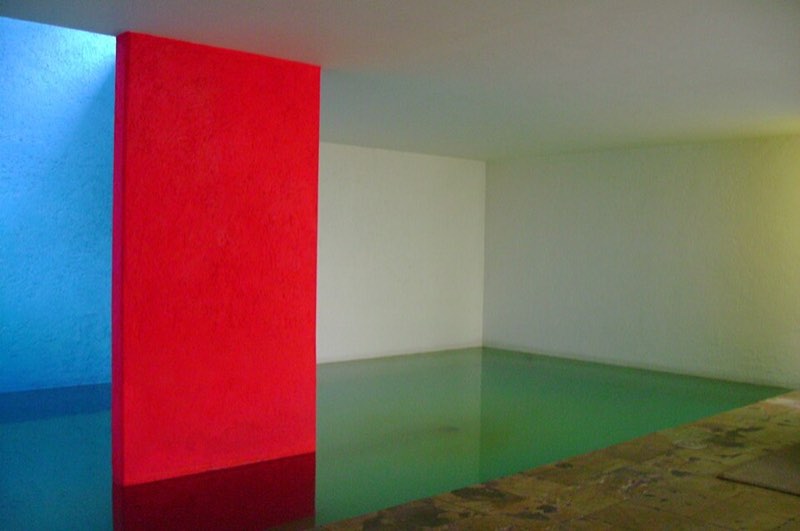
His last work, finished in 1976, built around a jacaranda the clients refused to cut, and still lived in by the family. A corridor of yellow light leads to a dining room where a pool sits under a blue wall with one red pillar standing in the water. Visits are by email with the family and limited to small groups. This is a house about a single moment, which is why it is better with someone to turn to.
Casa Pedregal and Tetetlán
Either
book the house, walk into the restaurant · Jardines del Pedregal
Casa Prieto López, finished in 1951, was the first large house Barragán built on the lava field, the proof that his suburb could work. Collector César Cervantes restored it and opens it by reservation. Next door the former stables are Tetetlán: restaurant, library and shop with a glass floor over raw lava, the Xitle flow of roughly 1,700 years ago. Eat there after the visit; the lava under the table is the same rock that buried Cuicuilco.
Capilla de las Capuchinas Sacramentarias
Alone
by appointment · Tlalpan
A chapel inside a working convent, built through the 1950s for nuns who still use it. A gold-leaf altarpiece by Goeritz, a cross of light thrown by a hidden yellow window, a wooden lattice that turns the sun into a grid. Visits are arranged with the convent by phone or email, with a small donation. Sit for twenty minutes without photographing; the chapel is about how long you can stay in one place.
ticketed, Tuesday to Saturday · Los Clubes, Atizapán (Estado de México)
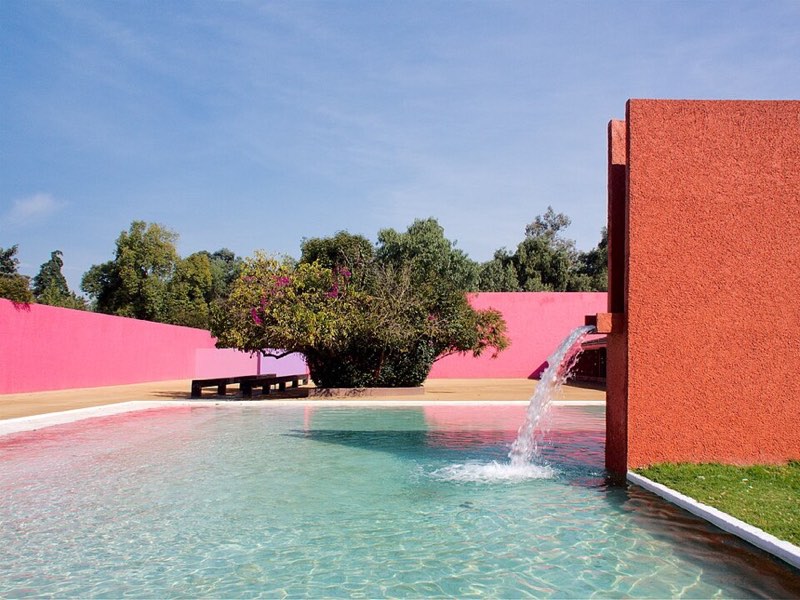
The pink-walled horse estate of 1968, with the fountain that pours into a drinking trough, is the Barragán of a thousand photographs. It was private for decades; since 2025 the Fundación Fernando Romero runs it as a cultural venue, open Tuesday to Saturday 11:00 to 16:00 with tickets online; the opening show was Marina Abramović. It is 45 to 60 minutes northwest by car. Combine with the Torres de Satélite and the Fuente de los Amantes, a smaller Barragán fountain in the same development. This is a landscape, not a room, so you walk it and talk.
i
Info.eleco Fotografía: Ramiro Chaves · CC BY-SA 4.0 · source
Museo Experimental El Eco
Alone
free, Wednesday to Sunday · San Rafael
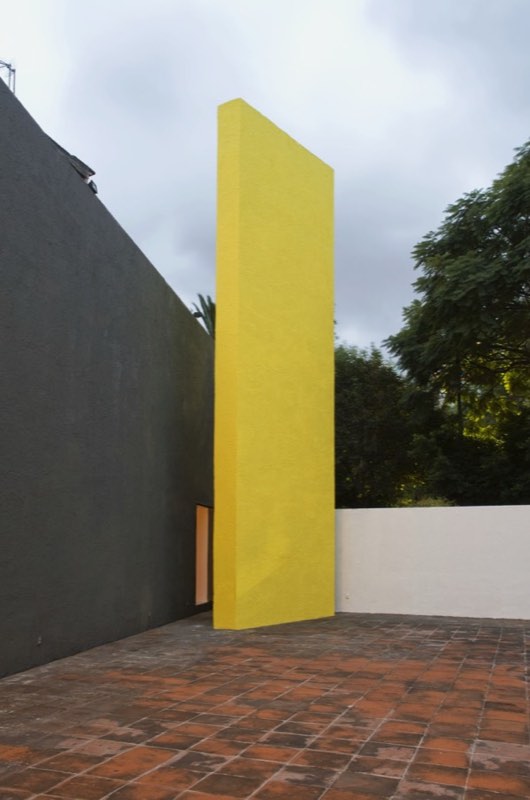
Goeritz's 1953 manifesto built as a building: a long, nearly black corridor that narrows as you walk, a patio with one yellow wall, a tall steel serpent. UNAM runs it now for installations that respond to the space. Fifteen minutes is enough; the corridor is the point. Walk from here to the Monumento a la Revolución or the Museo Nacional de San Carlos.
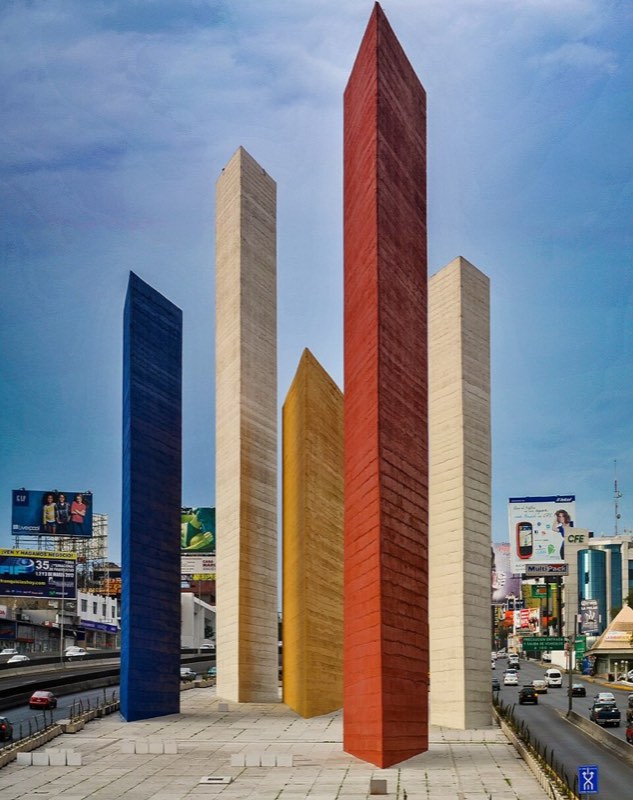
Five concrete prisms between 30 and 52 m tall, by Goeritz and Barragán in 1958, standing on a traffic island at the gate of a suburb. They were made to be seen from a car at speed, which is still the best way: have the driver loop twice at dusk, then walk to the base from the Plaza Satélite side when traffic allows. The thought they leave you with is that public sculpture can be aimed at a highway and still be sublime.
Deep time: the lake and the stones
Until 1521 this was a lake with an island capital on it, and the ground has not forgotten. Most of this section lies within a kilometre of the Zócalo, and the best entries are free.
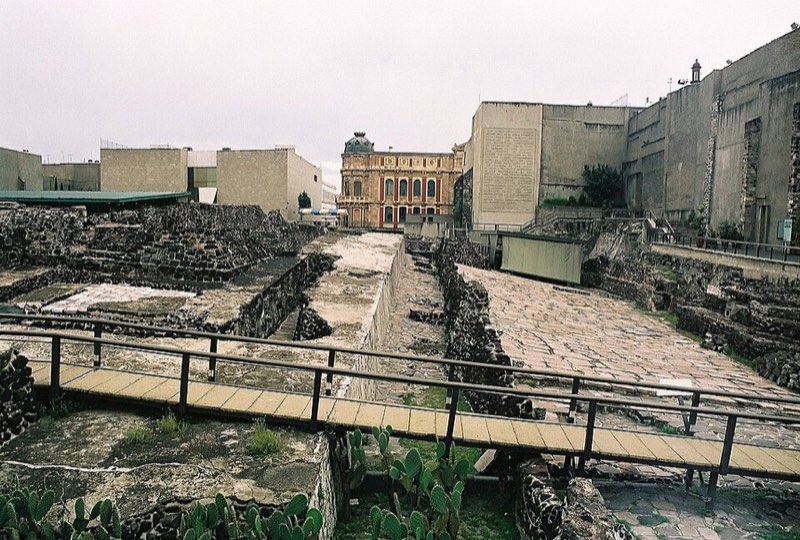
The twin pyramid at the heart of Tenochtitlan surfaced in 1978, when electricity workers hit the carved stone of the moon goddess Coyolxauhqui. Walkways now cross seven building phases nested one inside the other, each ruler's pyramid wrapped around the last. The museum behind it holds the 12-tonne Tlaltecuhtli monolith, still showing paint, and offerings of jaguar skeletons, coral and flint knives laid out as they were found.
Go at opening. Look first from the free raised walkway on Seminario street, then go in. The thought that stays: the cathedral next door was built from these stones, beside the temple rather than on top of it.
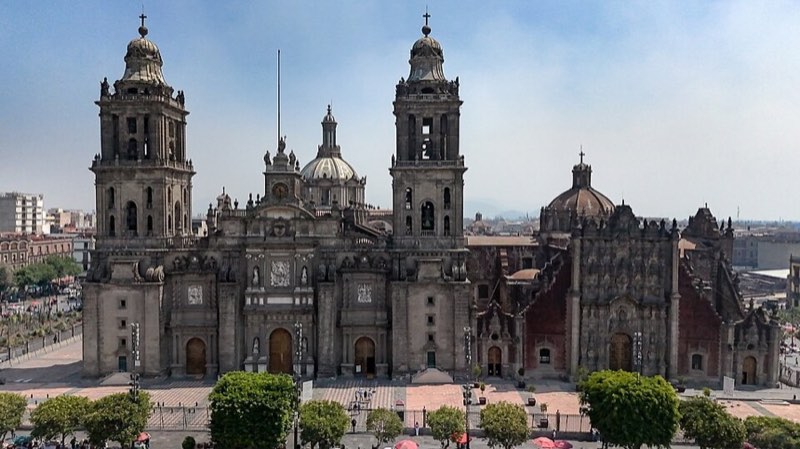
Inside the Metropolitan Cathedral a plumb line hangs from the central dome, with the floor marked to show how far the building has leaned as it sinks into lakebed clay. Engineers spent the 1990s digging soil out from under the high side to level it. Take the bell-tower tour afterwards for the roof and the bells. Parts of the Centro have dropped around 10 m in a century; the pendulum makes that number visible.
A baroque convent church so tilted that the nave floor slopes under you, now a space for sound art and performance. The tilt is the permanent exhibit; the shows change.
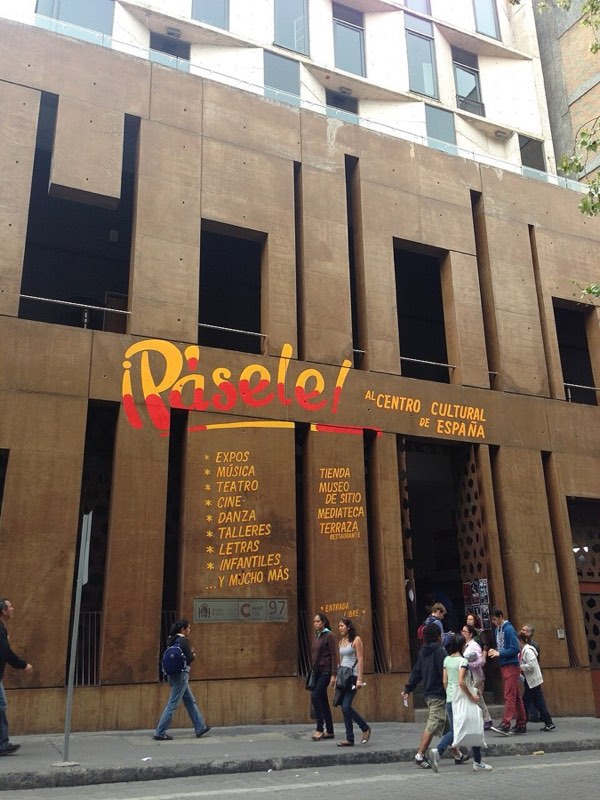
Behind the cathedral, a Spanish cultural centre whose basement holds the remains of the Calmécac, the Mexica school for the children of nobles, found during building work in 2006. A school under a school. The roof terrace has a bar and music on weekend evenings.
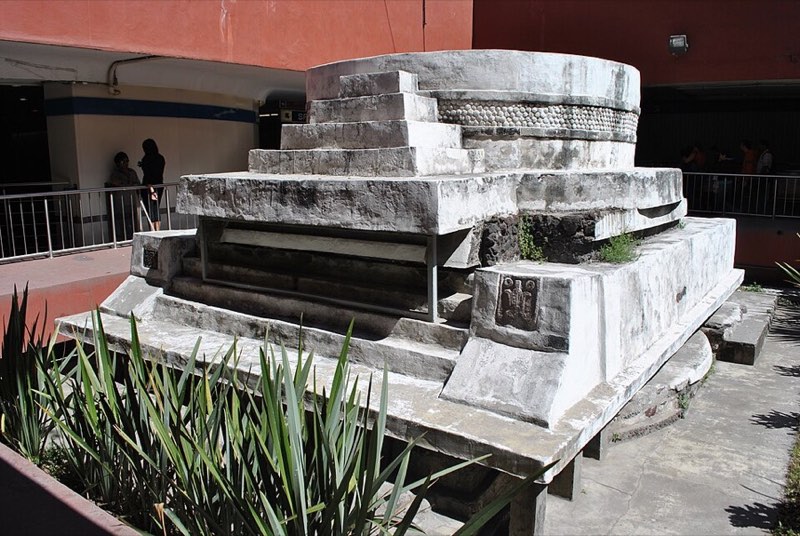
Inside the station concourse stands a small round temple to Ehécatl, the wind god, found in 1967 when the tunnel was dug and kept in a sunken garden among commuters. Two more things worth a stop: Metro Talismán on Line 4 displays the mammoth found during its construction, and every station carries a pictogram designed by Lance Wyman for 1969, made for a city where many riders could not read.
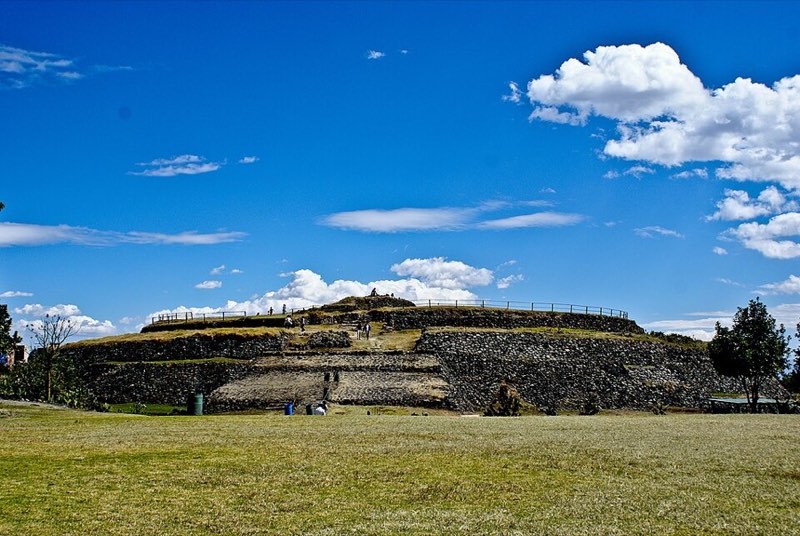
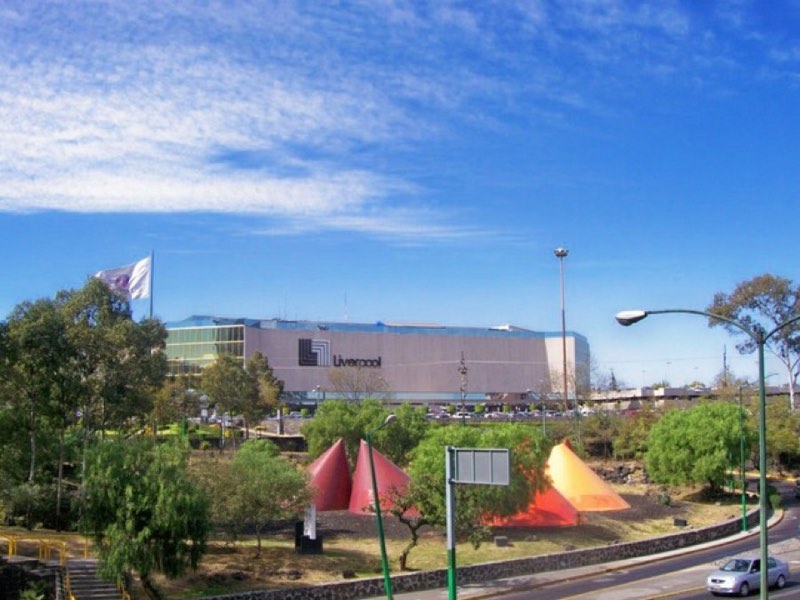
A round pyramid older than Teotihuacan, half-buried by the Xitle lava flow roughly 1,700 years ago, beside a shopping mall and a telephone tower. Almost nobody visits. Climb the ramp, look south at the Ajusco volcano that produced the lava, and remember that the same rock later became the Pedregal where Barragán built. The valley's first city was ended by a volcano, and the city that replaced it is built on the evidence.
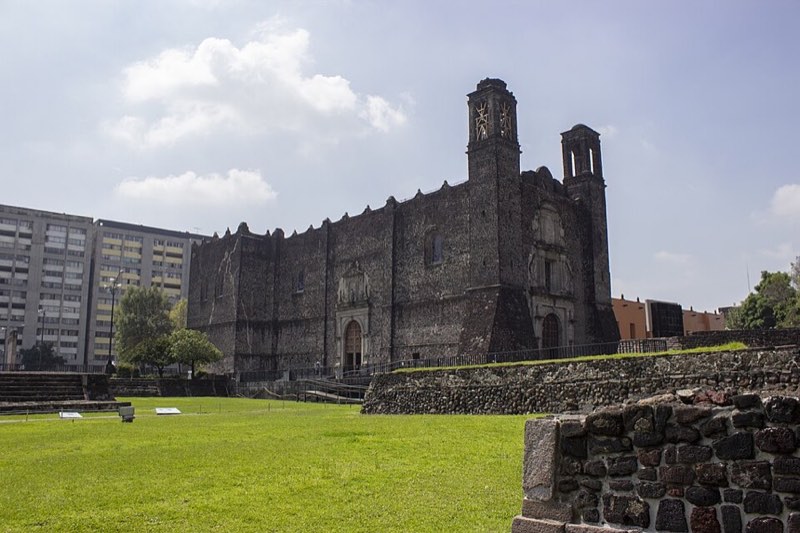
The Plaza de las Tres Culturas puts the ruins of Tenochtitlan's twin city and great market beside a 17th-century church and Mario Pani's 1964 housing estate. On 2 October 1968 the army fired on a student demonstration here; the Memorial del 68 inside the Centro Cultural Universitario Tlatelolco tells it through survivors' voices. In 1985 the earthquake brought down one of the estate's towers. Three cultures and two catastrophes in one square, and the plaque that says the fall of Tlatelolco in 1521 was "neither a triumph nor a defeat".
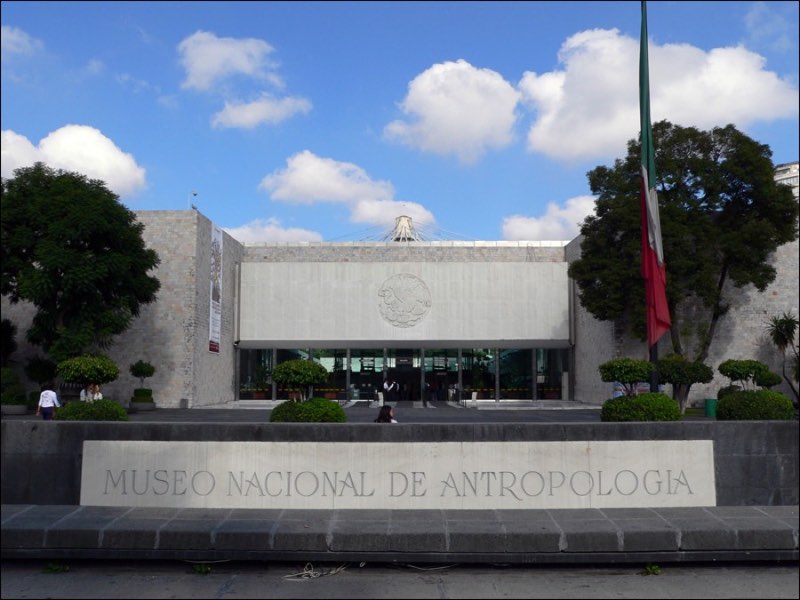
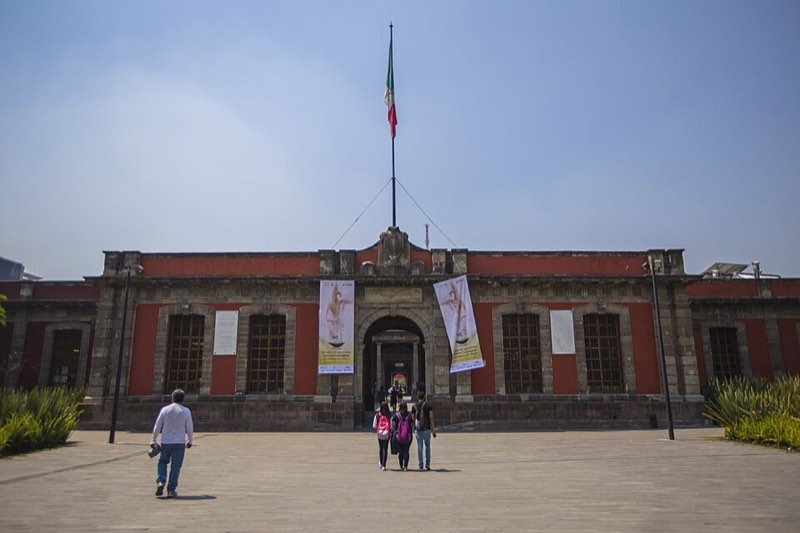
The rule is two halls, not twenty. The Mexica hall has the Sun Stone and the Coatlicue; the Teotihuacan hall has a full-size painted temple façade; the Maya hall has the reconstructed tomb of Pakal. Start under Pedro Ramírez Vázquez's 1964 umbrella fountain, a single column holding up a roof the size of a plaza. Alone, go at 9 on a weekday. Together, split up for an hour and then show each other one object.
i
The original uploader was Kristinoller at English Wikipedia. · CC BY-SA 3.0 · source
Xochimilco the quiet way, and Arca Tierra
Together
book · Xochimilco
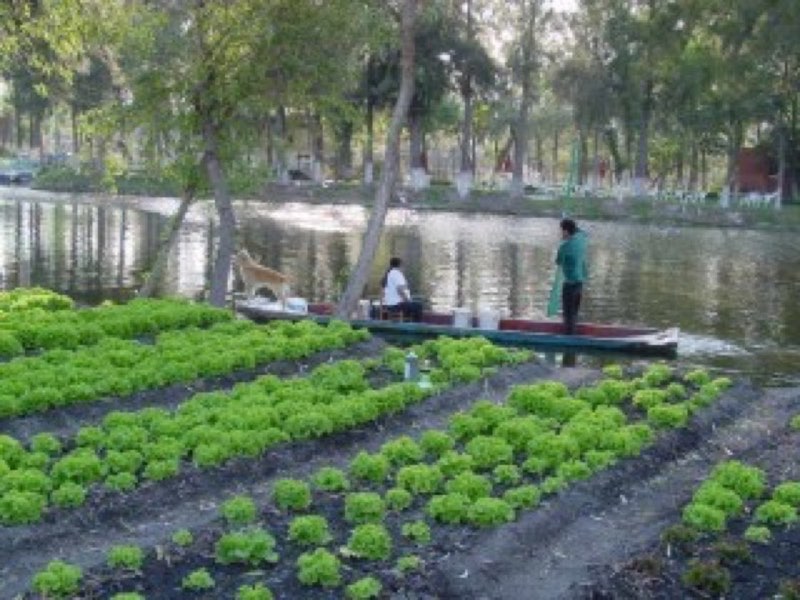
The chinampas are floating fields that have been farmed for around a thousand years and still supply the city's best kitchens. Skip the party docks. Arca Tierra's Amanecer Chinampero starts at 6 a.m. from the Cuemanco side: coffee, a boat through canals with nobody on them, and a three-course breakfast cooked over wood on a working chinampa, about three hours in all, around 990 pesos a person as of the last published price. It is the single most persuasive argument in this city for why the lake mattered.
If you want to see an axolotl, the canals will not show you one; the Anfibium museum at the Chapultepec zoo will.
free, Friday to Sunday 7:00 to 19:00 · east edge of the city, Estado de México
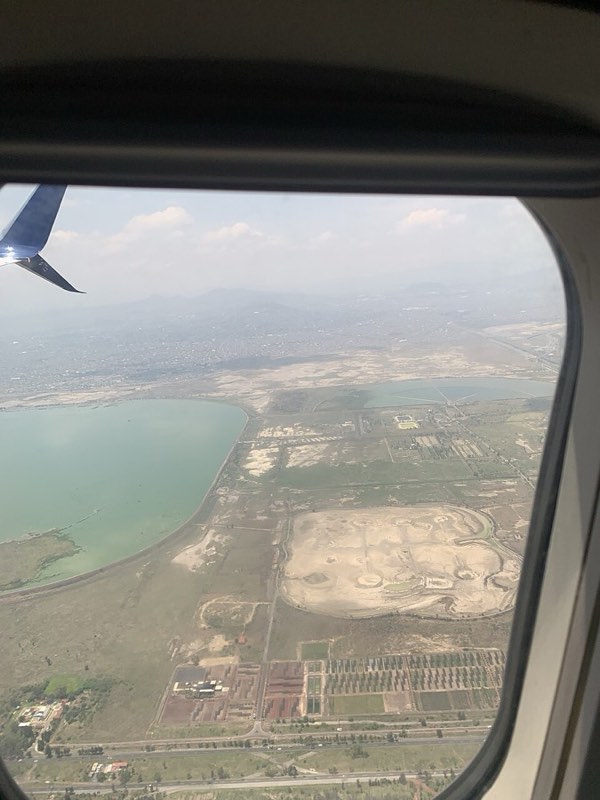
The lakebed itself, on the site of the cancelled airport, with wetlands restored and open since 2024. Migratory birds, a museum, bicycles, and an hour's drive. Internal transport has not run since 2025, nothing is sold to eat or drink, and disposable plastic is banned because it is a protected area; bring a refillable bottle. The thought: the lake returns whenever the city stops pumping.
Mammoths at Santa Lucía
Either
an hour north · Felipe Ángeles airport (AIFA)
Builders of the new airport found the remains of more than 200 mammoths in the old lakebed, the largest such find anywhere, and the Museo Paleontológico Quinametzin shows them where they lay. Worth it if you fly through AIFA, or paired with Tepotzotlán in the Beyond section.
Walls that argue
Muralism was a state programme to teach history to people who could not read it, and the painters used the walls to argue with the state. Seven buildings hold most of it. All but one are free, and the one that is not costs less than a coffee.
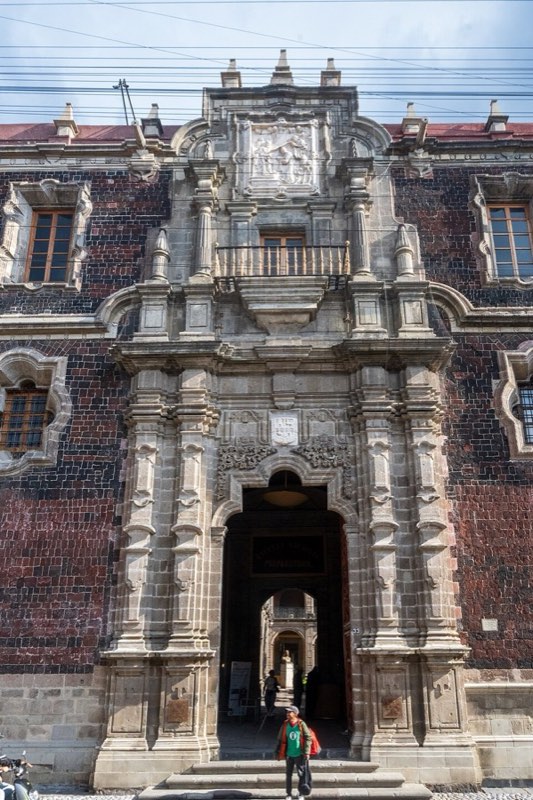
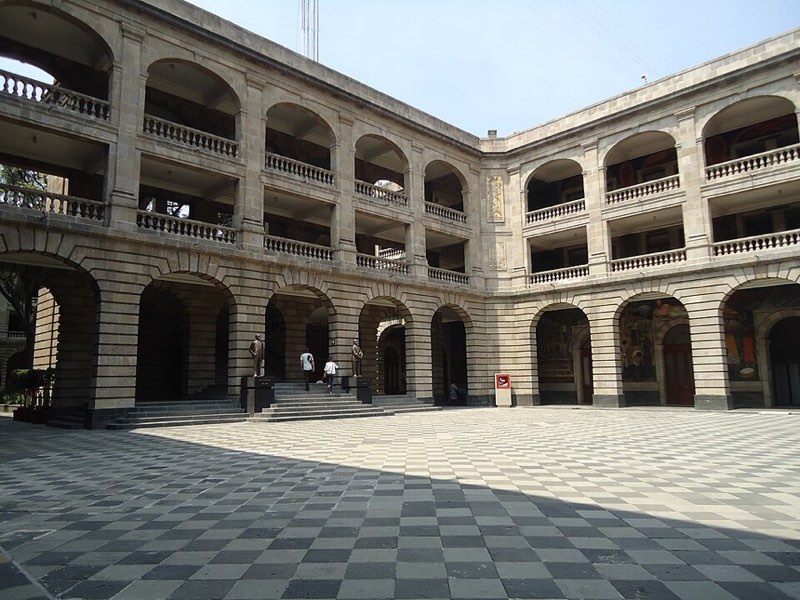
The Jesuit college where the movement began. Rivera's first mural, "La Creación" of 1922, still looks Italian; Orozco's stairwell and patio panels of 1923 to 1926 are the reason to come. His "Cortés and Malinche" shows the conquest as a naked couple holding hands over a prone body, which says more in one image than most books on the subject. Together, this is the building to argue in: Orozco doubts where Rivera declares.
The former Ministry of Education, whose two courtyards Rivera covered between 1923 and 1928 with more than a hundred frescoes, opened as a museum in 2024 after a century as working offices. Ground floor is labour: weavers, miners, sugar mills. Upstairs are the feast days and the painted "Corrido of the Revolution", with Frida Kahlo handing out rifles. Walk the ribbons of verse painted between the panels; they are the soundtrack. Go at opening on a weekday, when the courtyards are empty.
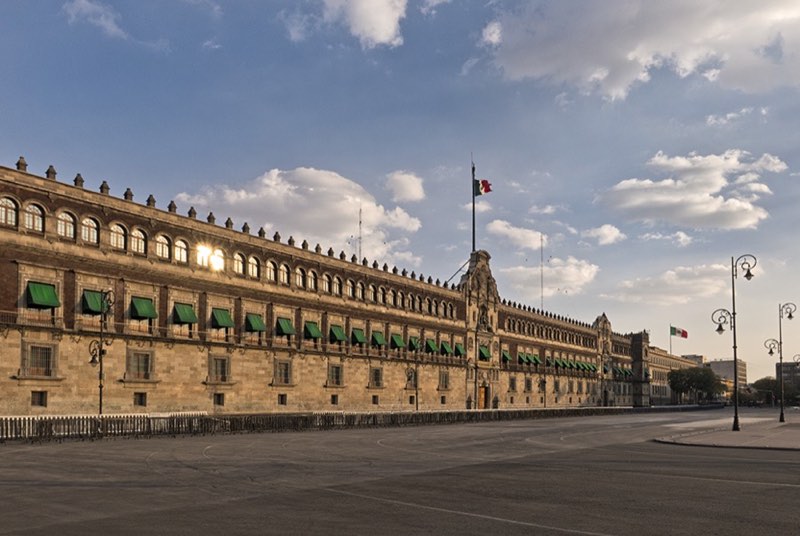
Rivera's "Epic of the Mexican People" fills the main staircase, and the upper corridor holds the Tenochtitlan market panel, the most loving picture of the lost city anyone has made. Access was restricted for years; visits now run as free guided circuits, Tuesday to Sunday, after you register at the Museo de Arte de la SHCP on Moneda 4 from 10:00, same day or ahead by email. English tours were at 10:30 and 15:30 at the last published schedule. Bring ID. A Marxist history has hung inside the seat of power for ninety years, and every president has walked past it.
i
Xavier Quetzalcoatl Contreras Castillo · CC BY-SA 3.0 · source
Palacio de Bellas Artes
Either
Tuesday to Sunday · Centro
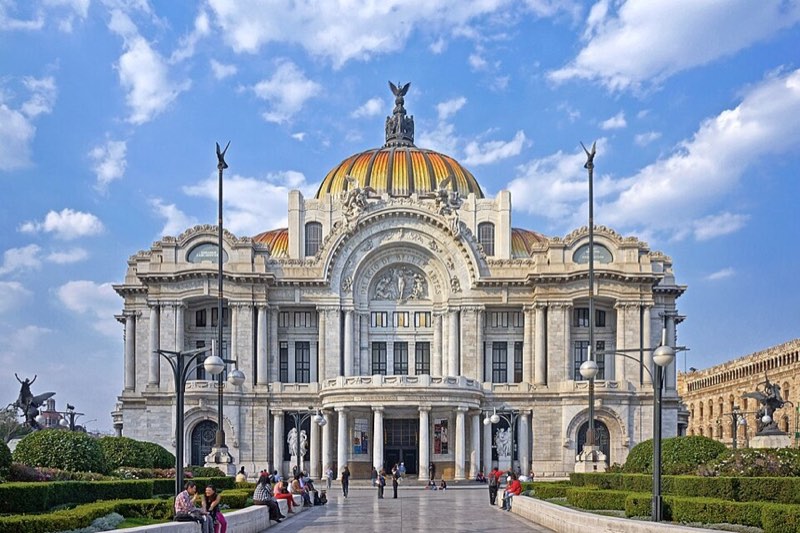
Upstairs: Rivera's "Man, Controller of the Universe", the repainted version of the Rockefeller Center mural destroyed in 1934 for including Lenin; Orozco's "Katharsis"; Siqueiros's "New Democracy"; two Tamayos. The building itself argues too, art nouveau marble outside and art deco inside, because the Revolution interrupted it for twenty years. Book the Ballet Folklórico (Wednesday evening or Sunday) once, mainly to see the Tiffany glass curtain of the two volcanoes lit before the show.
Museo Mural Diego Rivera
Alone
Tuesday to Sunday · Alameda
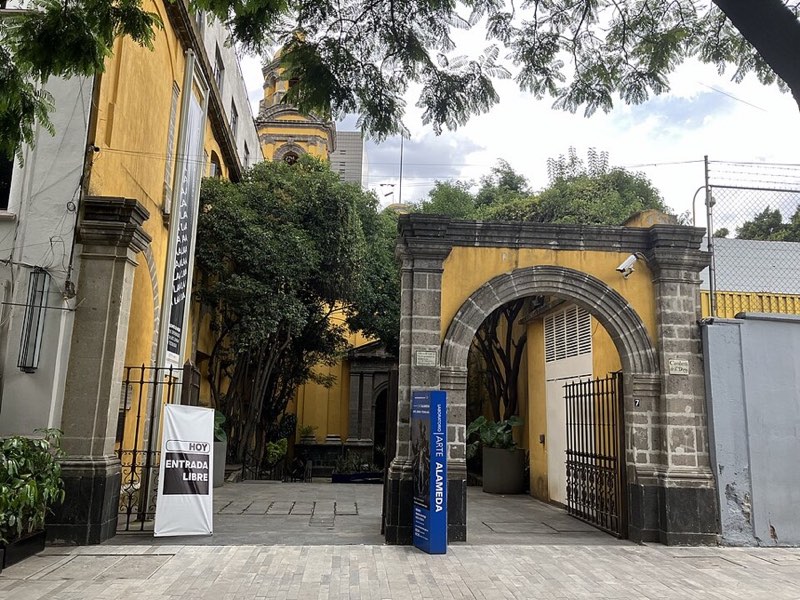
One room for one picture: "Dream of a Sunday Afternoon in the Alameda", moved here after the 1985 earthquake wrecked the hotel it was painted for. Stand close. Rivera as a boy holds the hand of La Catrina, who holds the arm of Posada, who invented her; Frida stands behind with a yin-yang in her palm. A nation drawn as a Sunday crowd, with its villains and its vendors in the same light.
A working finance-ministry library inside a 17th-century church, whose walls and vaults Vlady, son of the dissident Victor Serge, covered between 1972 and 1982 with around 2,000 m² of murals on revolution and its disappointments: Freud, Trotsky, the Bolsheviks, eroticism, doubt. Almost no one visits. Sign in with ID at the door on República de El Salvador, sit at a reading table, and look up. It is the counter-argument to everything Rivera painted, and it is ten minutes' walk from him.
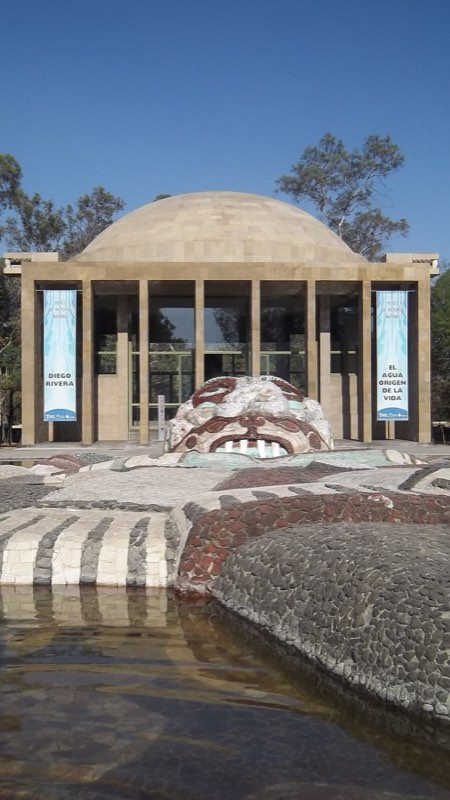
The chamber where water from the Lerma river first entered the city in 1951. Rivera painted "Water, Origin of Life" across the floor and walls of the tank, to be seen through moving water, and built the giant Tláloc mosaic lying in the pool outside. The water destroyed the paint; the tank is dry and restored now, and Ariel Guzik's "Cámara Lambdoma" turns the flow in the pipes into a slow organ chord. An engineering work with a mural about evolution, and the only mural in the city with a soundtrack.
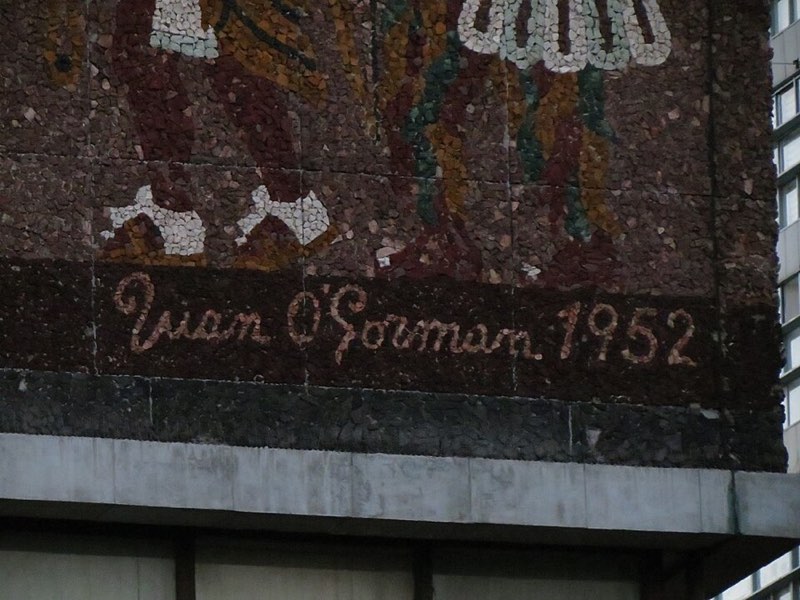
The 1950s campus is a UNESCO site, and Juan O'Gorman's Central Library is its best argument: four blank walls wrapped in a stone mosaic of Mexican history, made from coloured rock gathered across the country so it would never fade. Siqueiros's relief on the Rector's tower and Rivera's stone relief on the Olympic stadium complete the set. Walk from the library across the lawns on a Sunday, then continue to the Espacio Escultórico in the Contemporary section.
Siqueiros's last house and studio, given to the nation in 1969, with murals inside and on the façade and a small programme of shows. A quiet half hour near the Chapultepec museums.
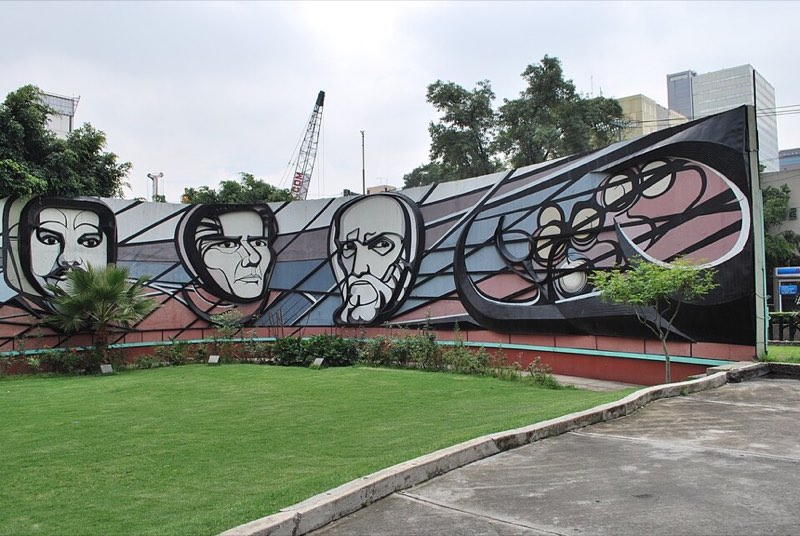
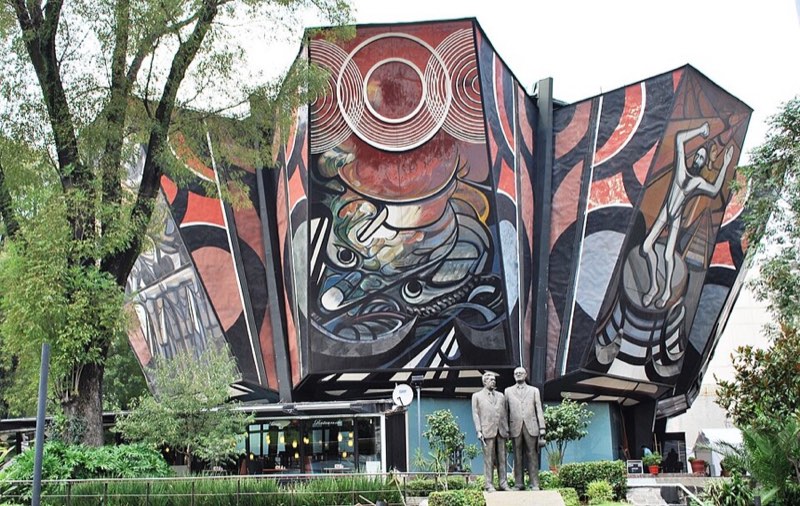
The twelve-sided building holding "The March of Humanity" of 1971, the largest mural in the world, is closed for a restoration run by a trust between the city, the owners, UNAM and the arts institute, with no reopening date as of mid-2026. The exterior panels are visible from the avenue. A mural so large it needs its own building, and a building nobody has agreed how to save.
Two small ones to collect on the way: Orozco's "Omnisciencia" on the staircase of the Sanborns in the Casa de los Azulejos, and O'Gorman's "Retablo de la Independencia" in Chapultepec Castle, which is in the Faith, death and memory section.
Houses of singular people
The city keeps the houses of its obsessives as they left them, and the best are small enough to see in an hour. Book Casa Azul; most of the rest you can walk into.
i
No machine-readable author provided. Nachtwächter assumed (based on copyright claims). · CC BY-SA 3.0 · source
Museo Frida Kahlo, the Casa Azul
Together
book online weeks ahead · Coyoacán
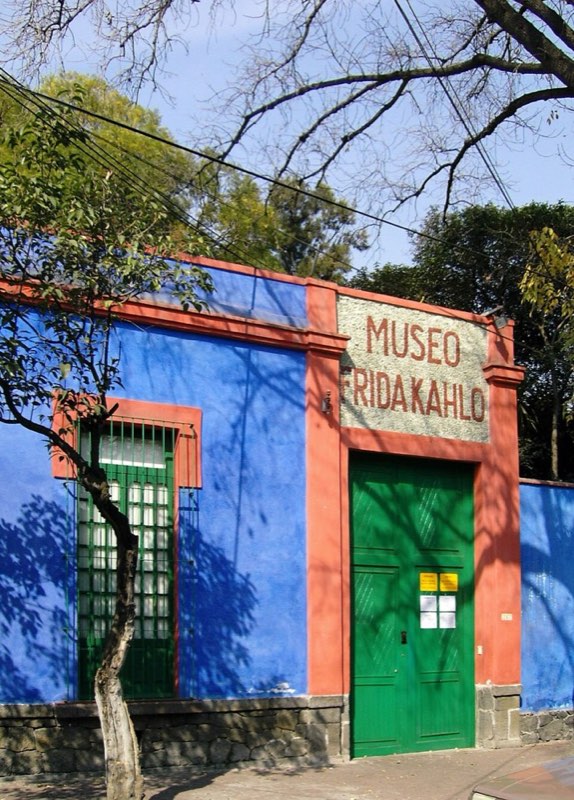
Kahlo was born in this house in 1907 and died in it in 1954. Book the first slot of the day online, because by noon it is a queue. Go for the objects rather than the paintings: the plaster corsets she painted, the mirror fixed above the bed, the kitchen whose clay pots spell out names on the wall, the easel Nelson Rockefeller gave her, the urn that holds her ashes. The pyramid in the garden was Rivera's shelf for his idols. This is a house about a marriage, which is why it belongs to the together list.
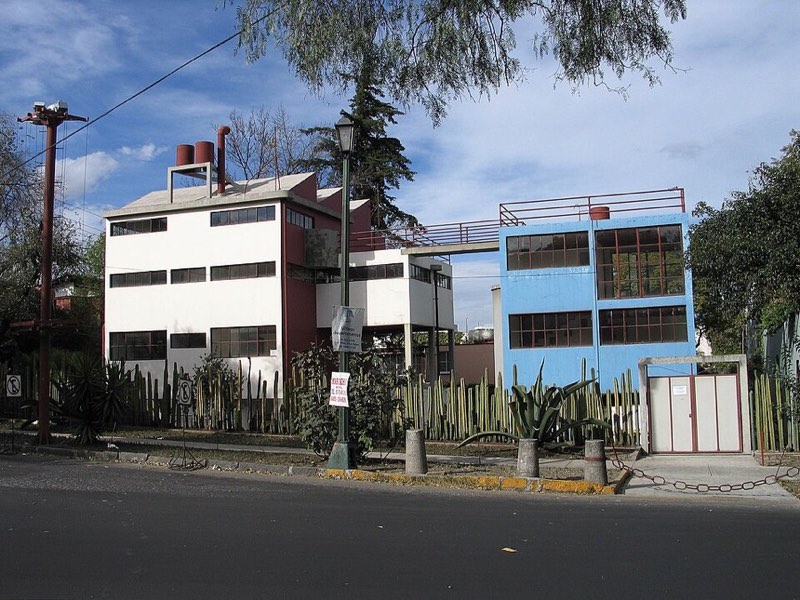
Juan O'Gorman, aged 26, built the couple two houses in 1931: a big red one for him, a small blue one for her, joined by a bridge across the roofs and fenced with cactus. It was among the first functionalist houses in Latin America and a theory of marriage in concrete. Rivera's studio still holds his giant papier-mâché Judas figures and his brushes. The San Ángel Inn across the road has served margaritas for decades and is the right place to discuss the bridge.
Tuesday to Sunday · San Pablo Tepetlapa, south of Coyoacán
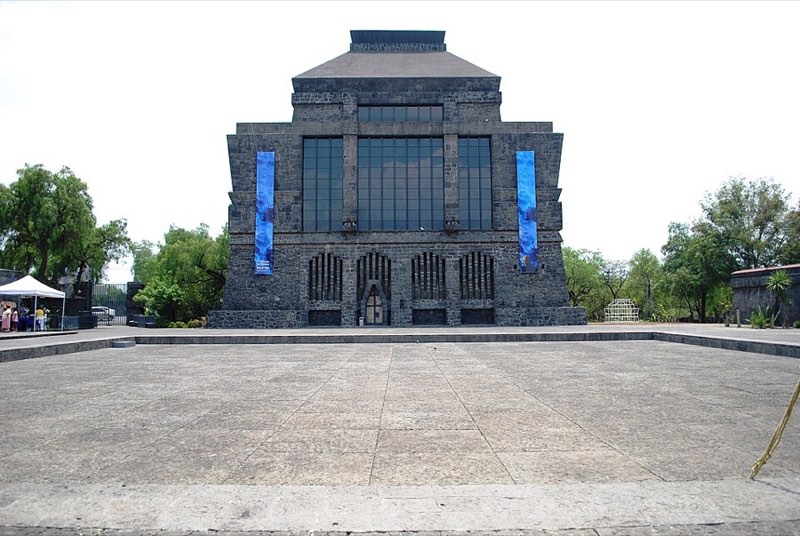
Rivera's temple for his pre-Hispanic collection, begun in 1945 in black volcanic rock and finished after his death by O'Gorman and his daughter Ruth. Around 2,000 of some 50,000 pieces are shown in dim rooms under mosaic ceilings, and the studio he never used holds the sketches for the Rockefeller mural. Mauricio Rocha's 2021 extension sits in the lava garden. Few visitors; the Día de Muertos offering here in late October and early November is the best in the city.
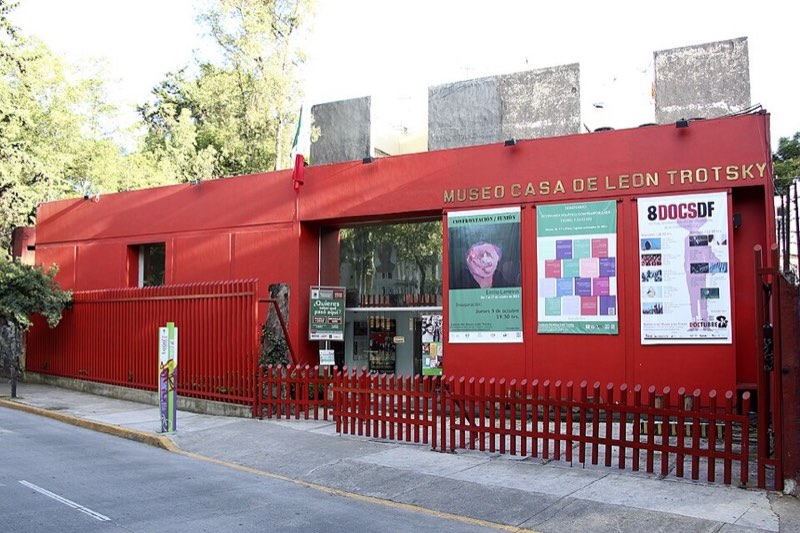
Trotsky lived here from 1939 and was struck at his desk on 20 August 1940 by a Stalinist agent with an ice axe; he died the next day. The study is as he left it, papers on the desk; the bedroom walls still carry bullet holes from the earlier raid that May, led by the muralist Siqueiros. The rabbit hutches he tended are in the garden, beside his grave with its hammer and sickle. Ten minutes' walk from Casa Azul, where the Riveras first housed him, and the right second half of that morning.
i
Secretaría de Cultura Ciudad de México from México · CC BY 2.0 · source
Casa Estudio Leonora Carrington
Alone
by email, groups of ten · Roma
The house at Chihuahua 194 where the surrealist painter lived from 1948 until her death in 2011, kept by the UAM university with more than 8,000 objects: the kitchen that doubled as a studio, the brushes, the bronze figures in the patio. Visits are arranged by email in groups of ten, and public hours were still listed as "to be confirmed" in October 2026, so write early and be flexible; there is a free 360-degree tour online meanwhile. Remedios Varo lived a few streets away and the two met most days, so Roma is also the neighbourhood of Mexican surrealism.
Saturday and Sunday at 10:00 and 12:00, reserve · Guerrero
Antonio Rivas Mercado, who designed the Angel of Independence, built this house for his family in the 1890s; it spent decades as a ruin before a ten-year restoration. The dramatised tours run about ninety minutes, cost 150 pesos, and feature his daughter Antonieta, who bankrolled the 1920s avant-garde and the Vasconcelos campaign and shot herself in Notre-Dame in 1931. Take a car to the door; the street is rough.
A colonial house on Plaza San Jacinto with a courtyard fountain made of broken porcelain, plates, cups, shells and mother-of-pearl, 18th-century rubbish assembled into baroque. Upstairs is the collection of Isidro Fabela, the diplomat who gave the house to the nation. Combine with the Saturday craft market in the same square.
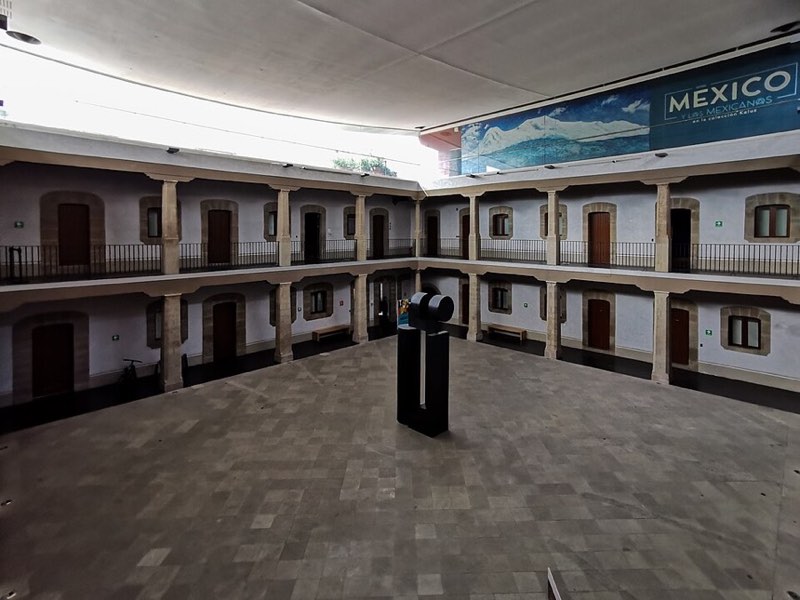
The collection of Carlos Monsiváis, the chronicler of Mexican popular culture: some 20,000 toys, prints, photographs, cartoons, Posada skeletons and miniatures, shown in rotating themed exhibitions. The roof terrace looks down Madero street. A nation seen through its junk, by its sharpest critic.
Museo de la Ciudad de México and the Clausell studio
Alone
Tuesday to Sunday · Centro
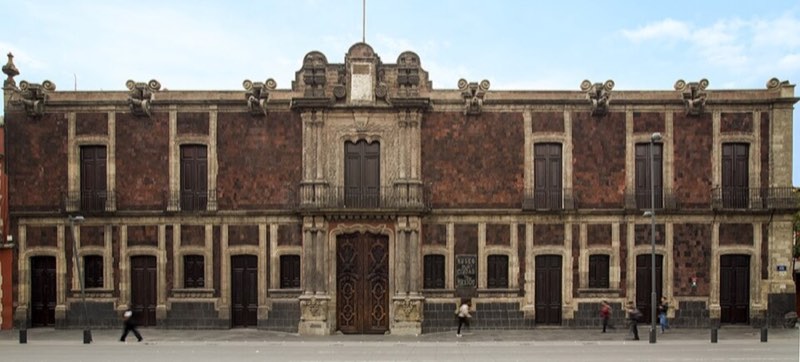
The 1779 palace of the counts of Santiago de Calimaya has a carved Mexica serpent head as its cornerstone, taken from the ruins. Upstairs, the lawyer and painter Joaquín Clausell covered the walls of his studio, floor to ceiling, with small landscapes and figures over thirty years. A wall used as a sketchbook.
The Moorish-colonial house on Francisco Sosa where Octavio Paz spent his last months is now the national sound archive. Hidden speakers in the garden play soundscapes; the listening room will find you Paz reading his own poems or a 1930s radio drama. A library you hear.
Tuesday to Sunday 10:00 to 18:00, tickets online · La Noria, Xochimilco
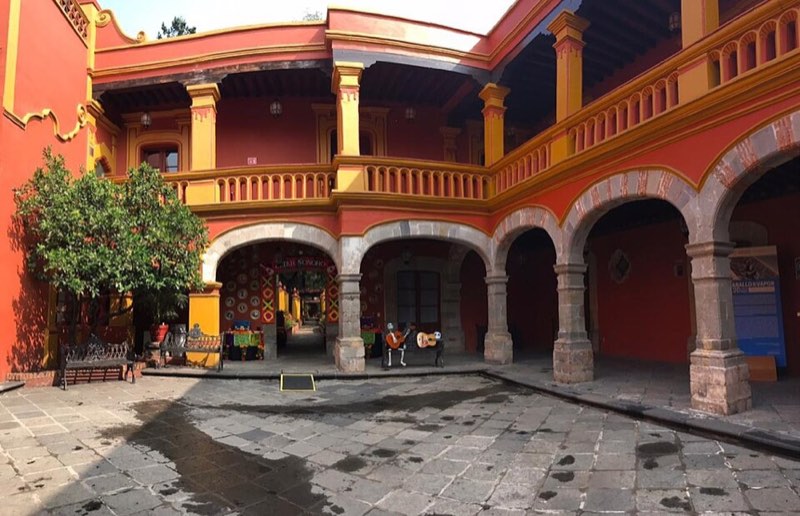
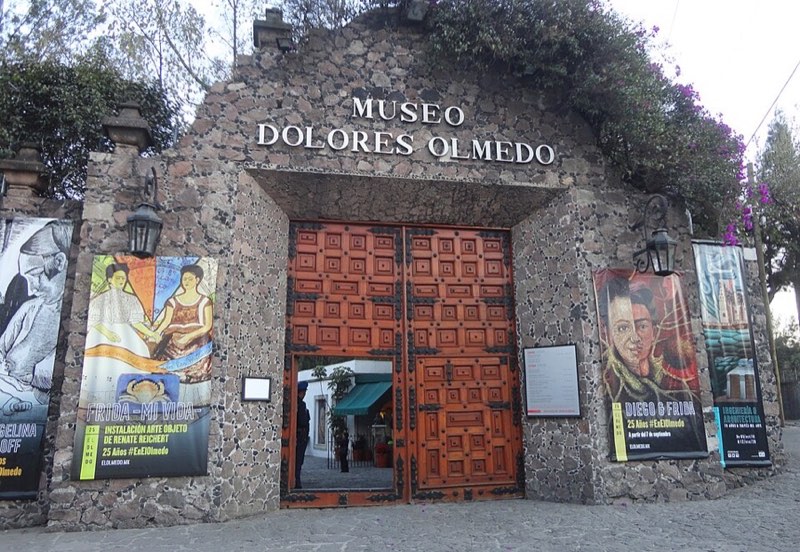
Reopened on 30 May 2026 after six years shut: 148 works by Rivera and the largest group of Kahlos anywhere, including "The Broken Column" and "Henry Ford Hospital", in the 16th-century hacienda of Dolores Olmedo, Rivera's patron and lover. Peacocks and xoloitzcuintle dogs still walk the gardens, and rooms of her own house are open for the first time. Pair it with an Arca Tierra morning; both are in Xochimilco.
Cabinets of curiosity
The small museums are where the city keeps its oddities, and most cost under 100 pesos or nothing. They run roughly from the Centro outward.
Museo de la Medicina Mexicana, in the Palace of the Inquisition
Alone
free, daily · Plaza Santo Domingo, Centro
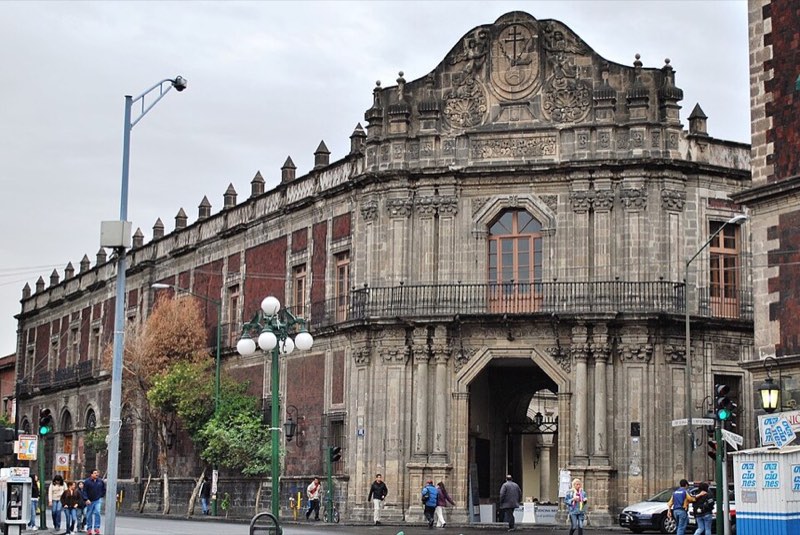
The Holy Office sat here from 1736; the courtroom and cells are restored on the ground floor. Upstairs the medical school that replaced it left a 19th-century teaching collection of wax models of skin diseases, a complete pharmacy, and a room on pre-Hispanic herbal medicine. Under the arcade outside, public scribes still type letters and forms for people who cannot write them. Belief, pain and paperwork in one square.
The Shimizu family's collection of more than 20,000 toys from the 1880s to the 1990s, shown at hoarder density: lucha libre figures by the thousand, tin robots, a wall of dolls, street art on the roof. Nothing is curated, which is the point. Doctores is rough at the edges, so arrive by car in daylight. A century of what Mexicans wanted their children to want.
Pago en Especie, at the Museo de Arte de la SHCP
Alone
free, Tuesday to Sunday · Moneda 4, Centro
Since 1957 Mexican artists have been allowed to pay income tax in artworks, a scheme Siqueiros talked the Treasury into. The results hang in the former archbishop's palace, built over the temple of Tezcatlipoca, whose stones show through windows in the floor: Tamayo and Toledo beside thousands of lesser works the state had to accept. Tax as curation. This is also where you register for Palacio Nacional.
Manuel Tolsá's 1813 mining college is the finest neoclassical building in the Americas, and its entrance hall holds five iron meteorites from the deserts of Chihuahua and Zacatecas, the largest around 14 tonnes. Walk in and touch them. The staircase and chapel upstairs open on request. The heaviest things in the building fell from the sky.
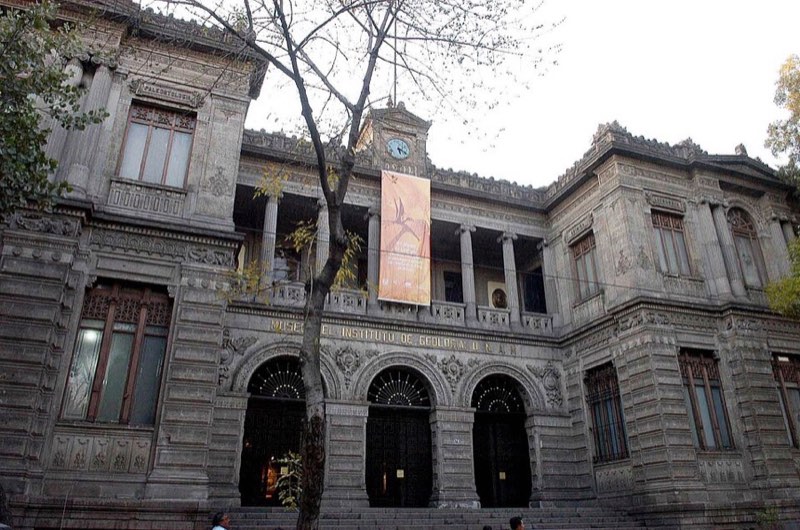
A 1906 art nouveau palace of rocks with an iron spiral staircase, fossil skeletons, mineral cabinets, and José María Velasco's painted series on the evolution of life. Two streets from the Moorish kiosk; see the Walks section.
A 17th-century Carmelite college under tiled domes, with colonial paintings upstairs and, in the crypt, a dozen naturally mummified bodies found in 1917 by soldiers digging for treasure. Holiness and decay in the same building, with a garden between.
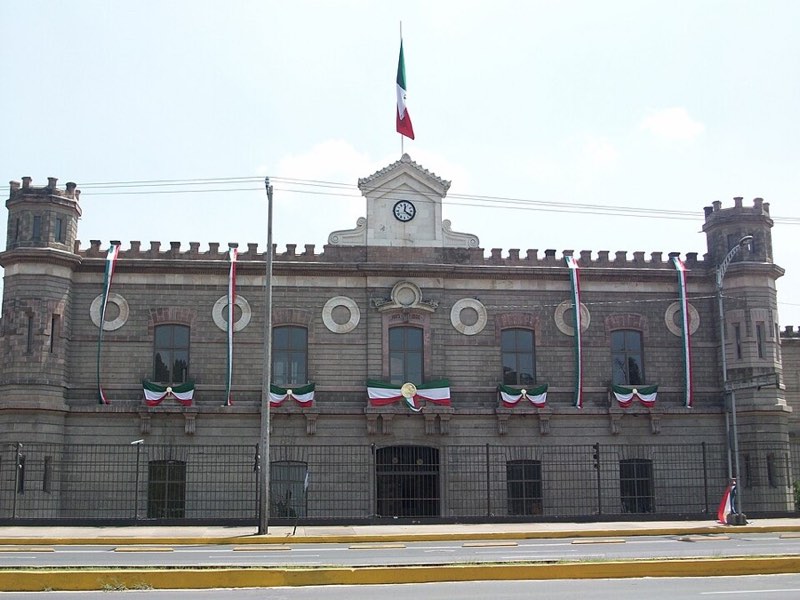
The 1900 panopticon prison, the Black Palace, held Siqueiros, the novelist José Revueltas and the students of 1968. Since 1982 it has been the National Archive, its radial galleries full of paper. Visits run through the INAH cultural walks programme, booked by phone or by email to reservaciones@inah.gob.mx, with limited places. A building designed so one guard could watch everyone now stores the state's own record of itself.
The convent where Mexican troops made their stand against the US army in 1847 is now a museum of every foreign invasion: Spain in 1829, France twice, the United States in 1847 and 1914. The Irish deserters of the San Patricio battalion, who switched sides and were hanged, have their plaque. For a visitor from the north, a mirror.
i
Museo Memoria y Tolerancia · CC BY-SA 4.0 · source
Museo Memoria y Tolerancia
Either
Tuesday to Sunday · Plaza Juárez, by the Alameda
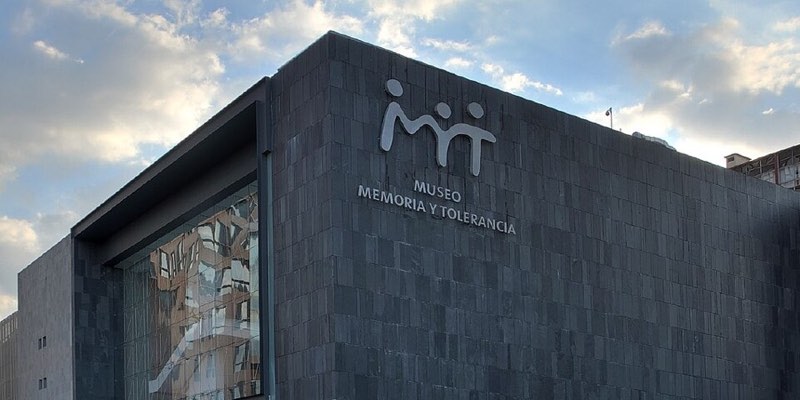
Half the building is a museum of genocides, from Armenia to Rwanda to Guatemala; the other half asks what tolerance means in Mexico now. It takes two hours and leaves nothing for a second serious place that day. Plan a walk in the Alameda afterwards.
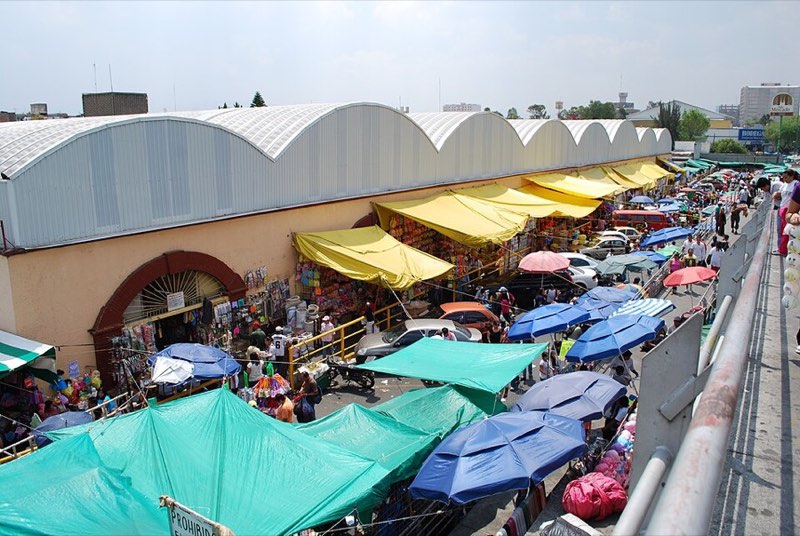
The market of remedies: herbs for every illness, candles for every intention, Santa Muerte statues, and stalls where a limpia, a spiritual cleansing with herbs and smoke, costs little. Go with respect, ask before photographing, and skip the animal section. A parallel pharmacy and theology, in stall form.
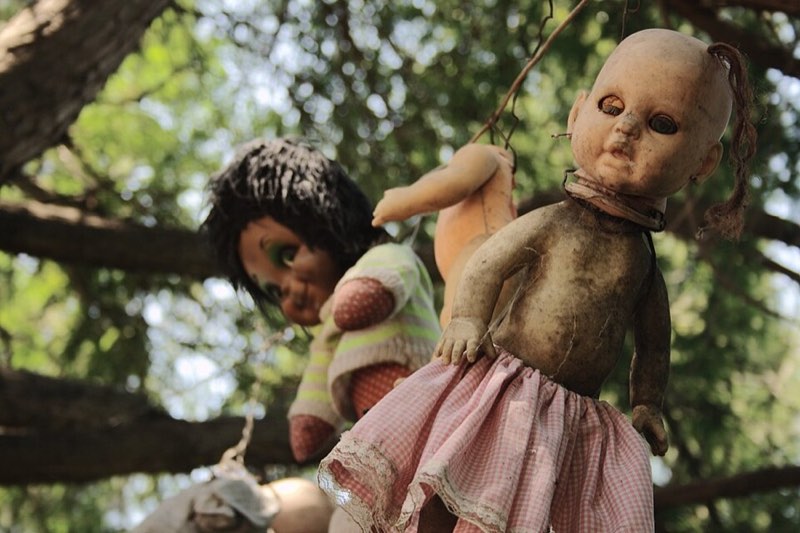
A chinampa hung with hundreds of rotting dolls, begun by Julián Santana to appease the ghost of a drowned girl and continued until he drowned in the same canal in 2001. Two hours each way by boat from the Cuemanco dock; nearer imitations exist, so ask for the original. Grief made into a place.
Books, sound and night
The city reads and dances in public. The libraries are free and the dance halls cost less than the taxi there.
Alberto Kalach's 2006 library hangs its steel shelves in a hall the size of a cathedral, with a whale skeleton drawn over in graphite rings by Gabriel Orozco floating down the middle. Climb to the top floors and look down into the stacks, then walk out into the botanical garden that wraps the building. A library as landscape.
Inside the 18th-century tobacco factory, the personal libraries of five writers, among them Carlos Monsiváis and José Luis Martínez, were rebuilt as rooms within the library, each by a different architect, with the owner's furniture and order kept. You can sit in them and read. The Centro de la Imagen, the national photography centre, shares the complex. Five minds kept as five rooms.
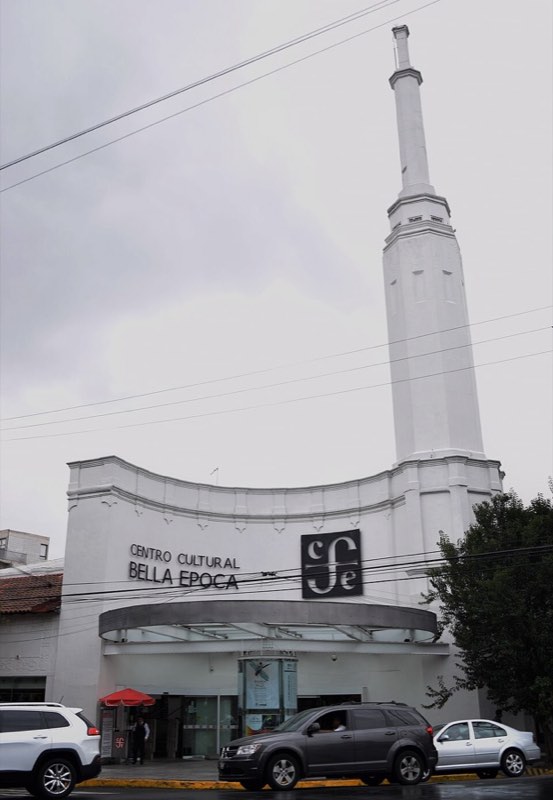
The state publisher's flagship in a 1940s cinema, under Jan Hendrix's ceiling of leaf shadows, with a café and the best Spanish-language stock in the city. For English, Under the Volcano Books in Condesa; for art books, Casa Bosques in Roma; for the building, the Centro Cultural Elena Garro in Coyoacán, a glass bookshop wrapped around an old house and its tree.
free, Tuesday to Sunday 9:00 to 16:00 · Chapultepec, below the castle
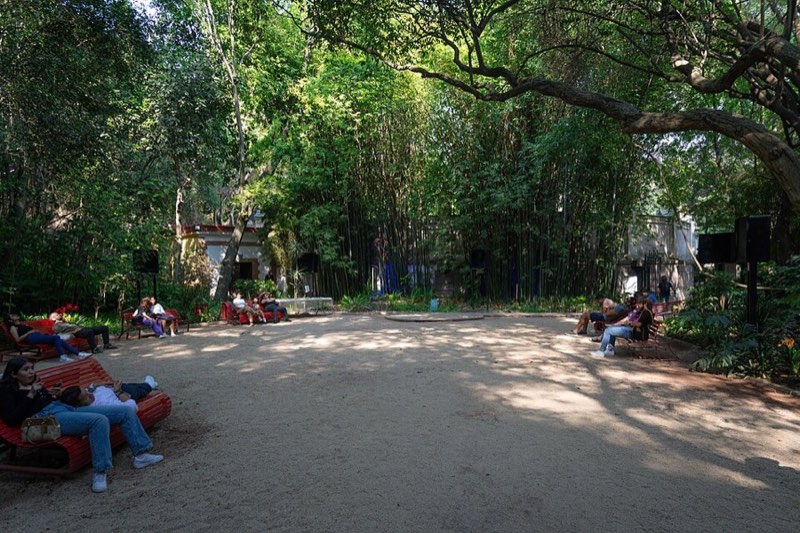
A small terraced garden cut into the rock under the castle, with speakers playing classical music and jazz, benches, and a sign asking for silence. Enter from the Puerta de Flores side. The only official quiet place in a city of nine million.
i
Dirección General de Música, UNAM · CC BY-SA 3.0 · source
Sala Nezahualcóyotl
Together
concerts Friday and Saturday evenings, Sunday at noon · Ciudad Universitaria
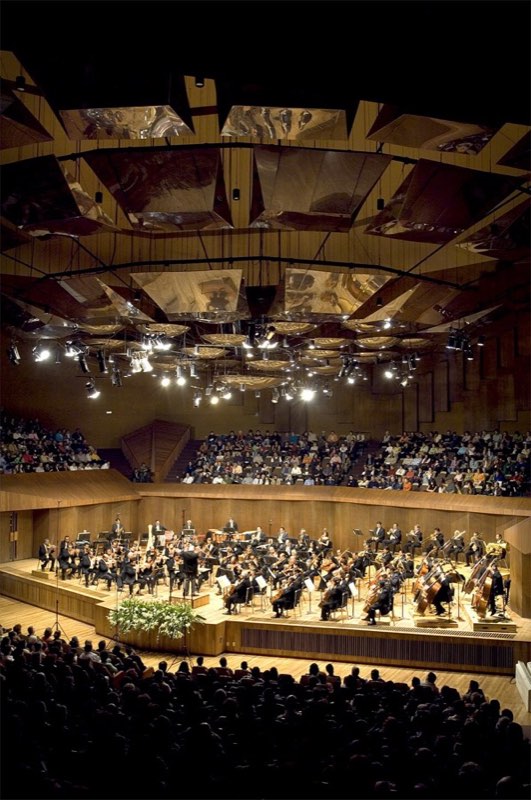
The 1976 hall in the university woods was the first vineyard-style concert room in the Americas, built on the Berlin model with the orchestra in the middle. The university orchestra plays its seasons here for the price of a sandwich. Combine with MUAC and the Espacio Escultórico next door.
Tuesday for danzón and swing, Sunday for salsa and cumbia, evenings · Guerrero
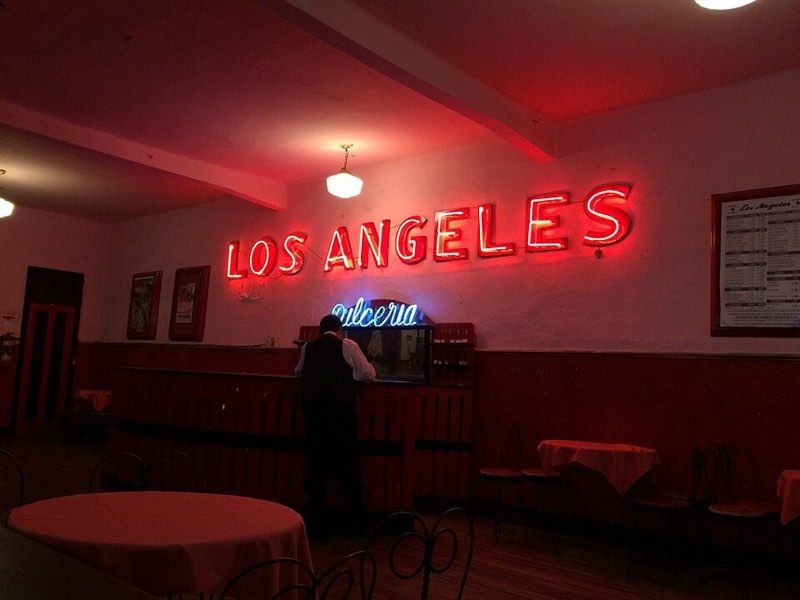
Open since 1937 under the sign "Whoever doesn't know Los Ángeles doesn't know Mexico". Tuesday is danzón with a live orchestra and couples who have danced together for fifty years, who will teach you the pause on the fourth beat. Published hours vary by source, with 17:00 to 23:00 the usual, so check its social pages that week and take a car to the door. A dance that arrived from Cuba in 1879 and became Mexican. Cheaper and outdoors: free danzón in the Plaza de la Ciudadela on Saturday afternoons.
Zinco Jazz Club
Together
Wednesday to Saturday from 21:00 · Centro
In the vault of the old Bank of Mexico building on Motolinía, twenty years old in 2025, and still the city's jazz room. Book a table.
The 2012 complex in Xoco, Coyoacán, has Michel Rojkind's pleated canopy and open-air screenings on warm nights. The Cineteca Nacional Chapultepec, opened in 2024 in the forest's fourth section, is reached by the Cablebús Line 3 cable car to its own station; the ride over the ravines is half the outing. Most films screen in their original language with Spanish subtitles.
Friday at 20:30, also Tuesday and Sunday · Doctores
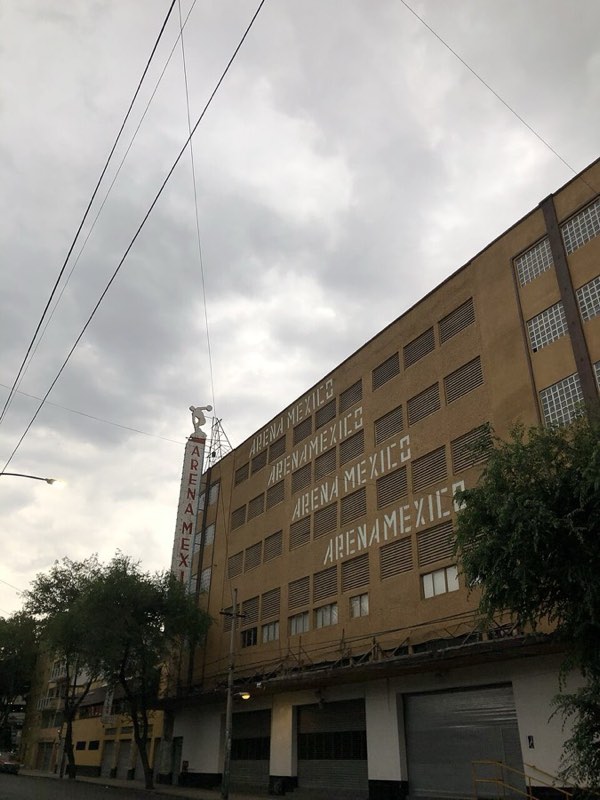
Masked wrestling in its 1956 cathedral: the good técnicos against the cheating rudos, the grandmothers screaming insults, the mask-versus-hair stakes. Buy ringside at the box office or online; it is cheap. Roland Barthes wrote the essay for this. Arena Coliseo in the Centro on Saturdays is the older, smaller hall.
Noche de Museos
Either
last Wednesday of each month
Most museums stay open until around 22:00 with concerts and talks, free. If a visit falls on that Wednesday, put the Centro's museums in the evening and keep the morning for the houses.
The contemporary
The art scene is the one part of the city that changes every season, so this section names rooms rather than shows. Galleries are free, museums cost little, and nearly everything shuts on Monday.
Jumex Tuesday to Sunday, Soumaya free daily · Plaza Carso, Polanco
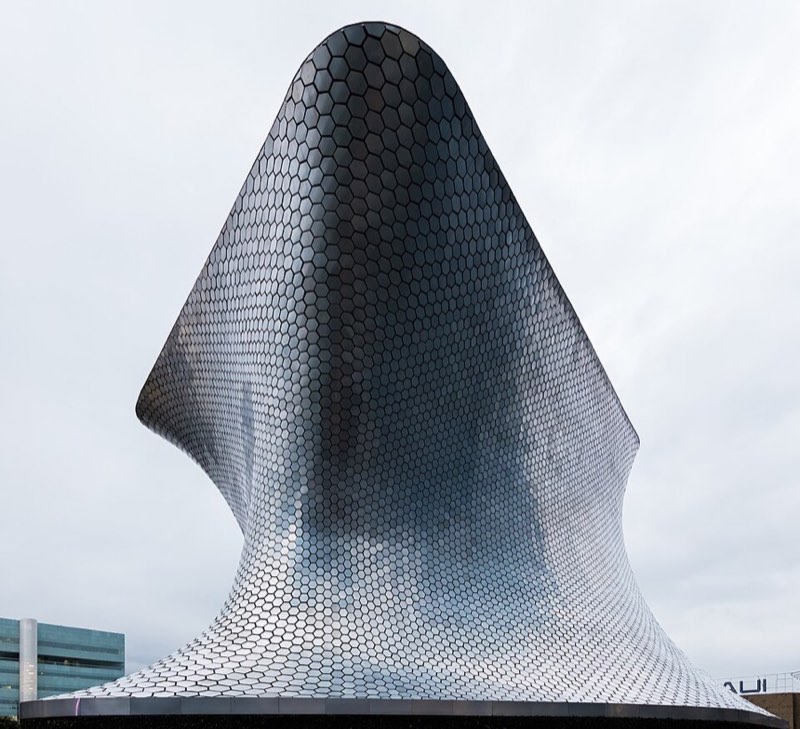
Two fortunes face each other across a plaza. David Chipperfield's sawtooth-roofed Jumex of 2013 holds the largest private contemporary collection in Latin America and mounts two or three serious shows a year. Fernando Romero's silver-scaled Soumaya holds Carlos Slim's hoard: the biggest group of Rodins outside France, old masters of uneven quality, and a top floor of sculpture under a skylight reached by a spiral ramp. See Jumex for the art and Soumaya for the ramp, and compare the two theories of what a museum is for.
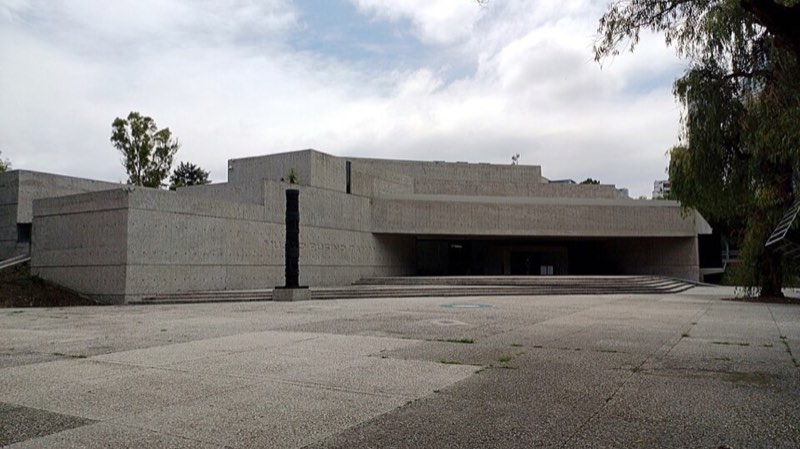
A 1981 concrete ziggurat in the trees by Teodoro González de León and Abraham Zabludovsky, built for Rufino Tamayo's own collection and now the best-run contemporary museum in the city, with international shows. A building that looks pre-Hispanic and houses the global.
Across the road under the 1964 domes: Kahlo's "The Two Fridas", Remedios Varo, Leonora Carrington, María Izquierdo and Dr. Atl's volcanoes, with a sculpture garden for sitting. The one room where the women of Mexican modernism hang together.
MUAC Wednesday to Sunday, the lava field in daylight · Ciudad Universitaria
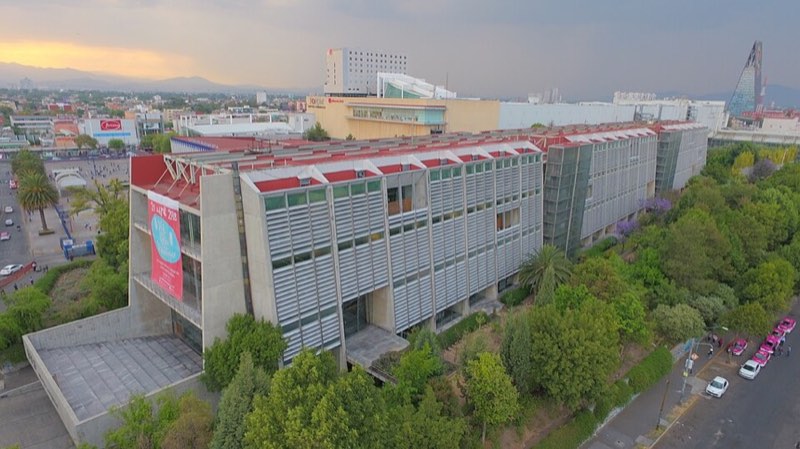
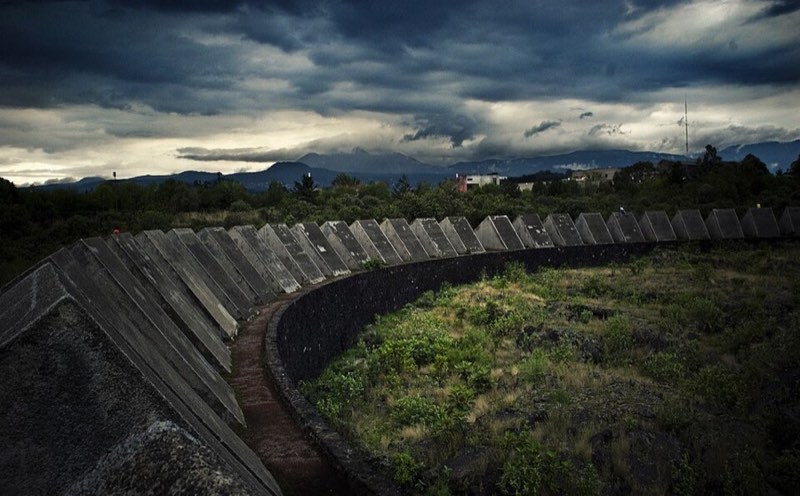
The university's 2008 museum has a glass wall that leans out over a pool, experimental shows, and the best art bookshop in the city. Ten minutes' walk away is the Espacio Escultórico of 1979: a ring of 64 concrete prisms, 120 m across, around a lava field left exactly as it was, made by six artists including Helen Escobedo and Mathias Goeritz. Walk the ring at five in the afternoon, then sit on the rim. Land art that frames nothing but the ground, and the best place in the city to think.
Kurimanzutto, Labor and the Galería de Arte Mexicano
Alone
Tuesday to Saturday · San Miguel Chapultepec
Three blocks hold the history of the Mexican art market. Kurimanzutto, the country's major contemporary gallery, shows Gabriel Orozco, Damián Ortega and Abraham Cruzvillegas in a former timber yard converted by Alberto Kalach. Labor sits on the same street as Casa Barragán. The Galería de Arte Mexicano, founded in 1935 by Inés Amor, sold Kahlo and Tamayo when nobody else would and still works from a house. Do them before or after the Barragán slot.
OMR occupies a 1950s brutalist former social club on Córdoba street and shows Jose Dávila, Pia Camil and Gabriel Rico. A dozen smaller spaces open and close around it in Roma and Juárez; the counter at Casa Bosques, a few doors away, keeps the current map.
Wednesday to Sunday 10:00 to 18:00 · Chapultepec, second section, on the lake
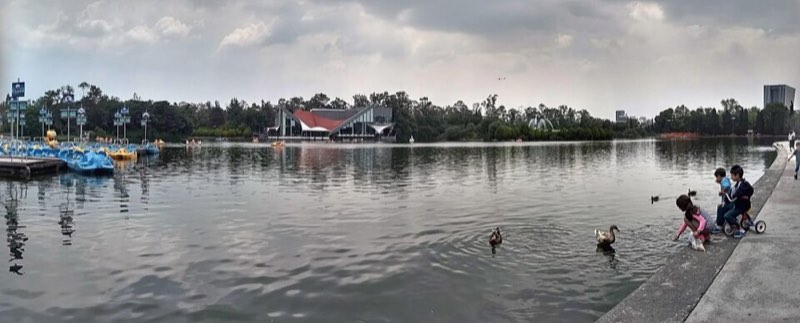
A 1964 pavilion with a saddle-shaped concrete roof on the big lake, reopened in 2022 as a restaurant downstairs and a free art space upstairs run with OMR; Trevor Paglen showed here in 2026. Lunch on the terrace after the Cárcamo, which is five minutes away.
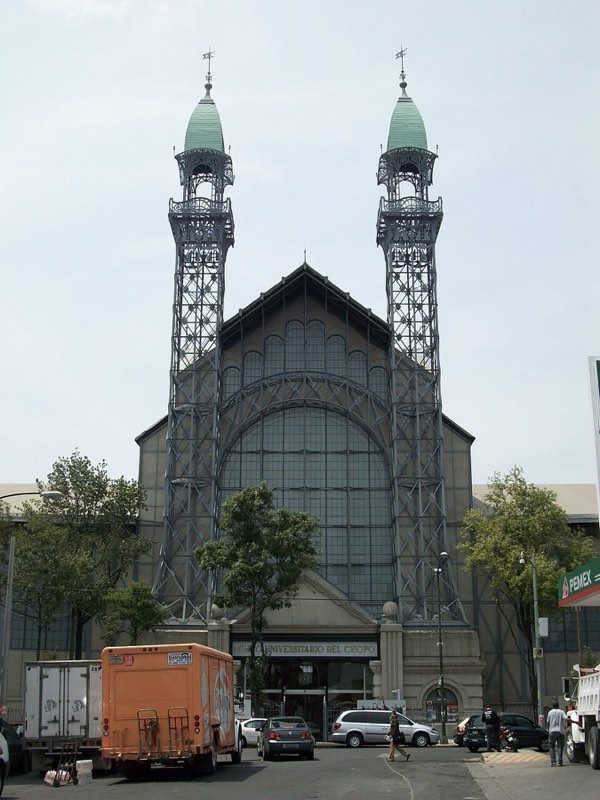
An iron-and-glass exhibition hall bought from Germany in 1902 and rebuilt here, once the natural history museum with a dinosaur, now a university space for the counter-culture, with a 2010 intervention by Enrique Norten. The Saturday goth and punk market that bears its name grew out of it and now runs a few streets away on Aldama.
Casa Wabi Sabino
Alone
check days · Atlampa, north of Santa María la Ribera
Bosco Sodi's foundation opened this city outpost in 2023 among factories: brick and raw concrete by Alberto Kalach, a gallery for young artists, a roof terrace. Five blocks from the Moorish kiosk; walk them in daylight.
Media and sound art in the former convent church of San Diego, the sister of Ex Teresa in the Deep time section. Two churches now showing the kind of art the church would once have burned.
Mexican painting from the colonial centuries to Dr. Atl in a restored 18th-century hospice, with a roof terrace under a Vicente Rojo mural that looks straight at Bellas Artes. The best rooftop in the Centro, and open on Mondays when nothing else is.
The February fairs
Together
the first full week of February
Zona Maco, the big fair, and Material, the independent one, fill the week with openings across Roma, Juárez and San Miguel Chapultepec, and the Barragán houses extend their hours. If a trip can be timed, this is the week; if crowds spoil it for you, it is the week to avoid.
Faith, death and memory
Religion here is layered like the ground: Guadalupe over the Mexica mother goddess, Santa Muerte over both, and a civic cult of the dead that takes over a week each November.
daily; avoid 12 December unless the crowd is the point · Tepeyac, in the north
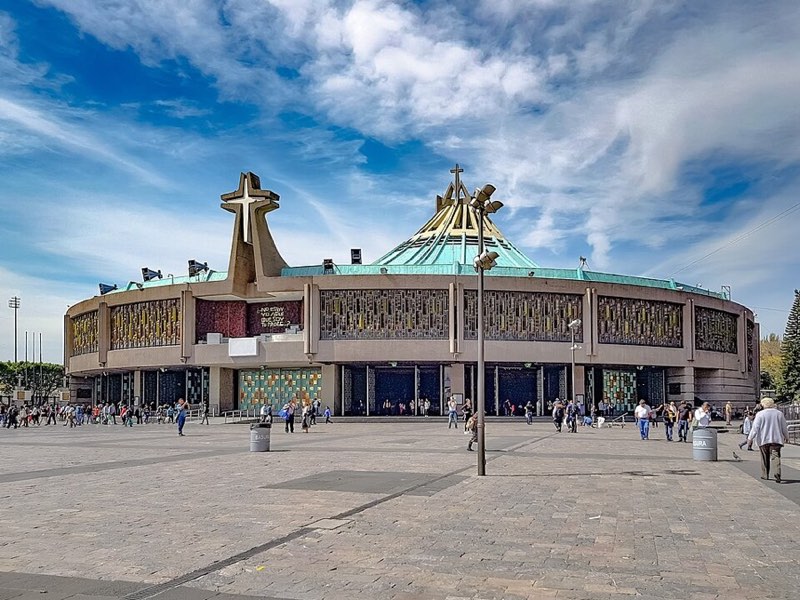
Around 20 million people a year come to the hill where, in 1531, the Virgin is said to have appeared to Juan Diego on the site of a shrine to Tonantzin. The old basilica of 1709 leans on the lakebed; the round 1976 basilica holds 10,000 and runs moving walkways under the image so that nobody can stop in front of it. Pilgrims cross the plaza on their knees. Climb to the hill chapel, then come down to the oval baroque Capilla del Pocito over the spring. Even for an unbeliever the minute on the walkway is one of the strangest in the city.
Rotonda de las Personas Ilustres, Panteón de Dolores
Alone
daylight hours · beside Chapultepec's second section
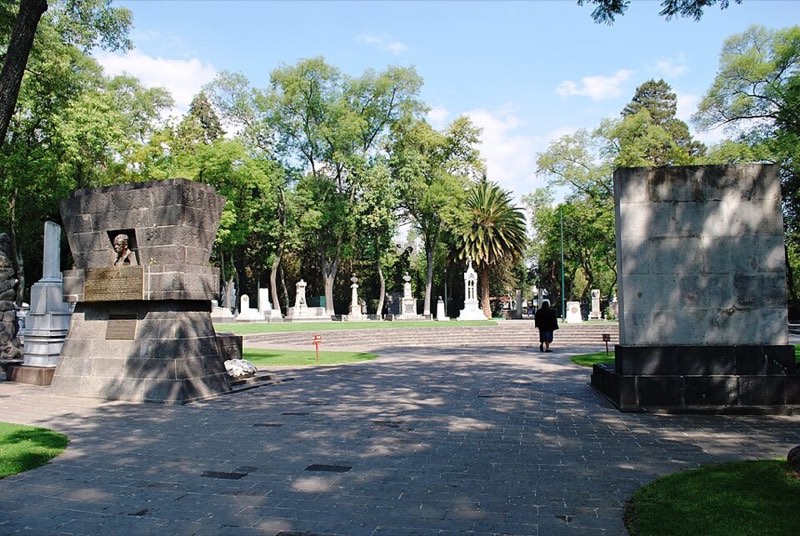
The largest cemetery in Mexico, where the state buries its artists and heroes in a circle around a flame: Rivera, Siqueiros, Orozco, Dr. Atl, Dolores del Río, Agustín Lara, Rosario Castellanos. Walk the ring, then follow the older paths behind it. A nation's idea of who matters, in marble.
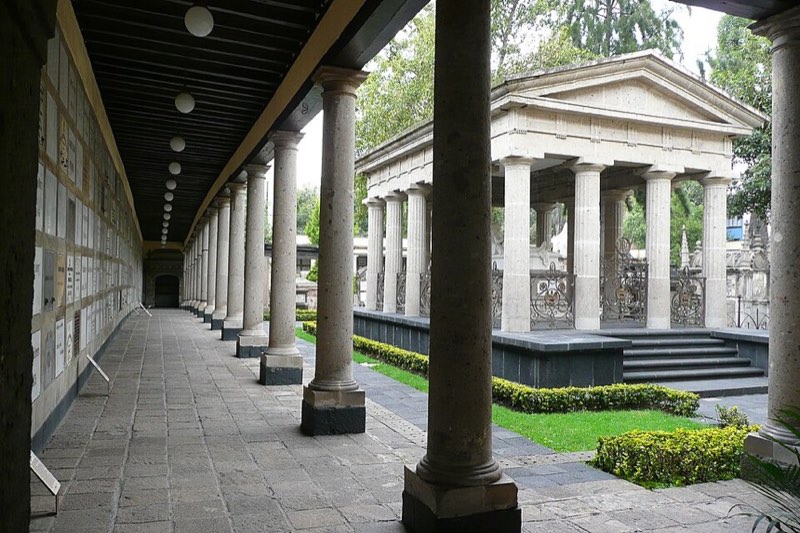
A small 19th-century cemetery of the Reform era: Benito Juárez under a marble figure of the Republic weeping over him, generals and ministers under neoclassical slabs. Fifteen minutes between the Alameda and the Museo de San Carlos.
the 28th of each month, above all 28 October · Reforma at Hidalgo
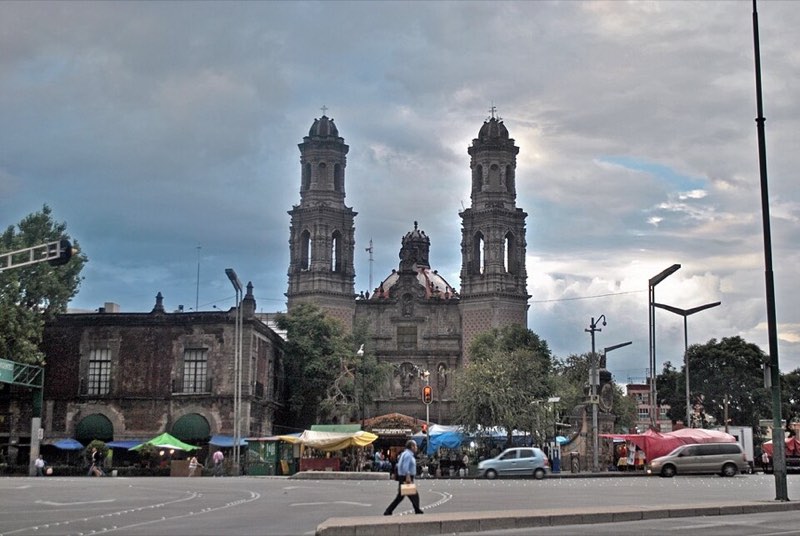
The church of St Jude, patron of lost causes, fills on the 28th of every month with tens of thousands of devotees carrying statues of the saint in green robes, many of them young men from the barrios; on 28 October the avenue closes. Stand at the edge and watch the statues being blessed. A saint for the hopeless in a city that runs on hope.
with someone who knows the barrio · the first of each month · Alfarería street, Tepito
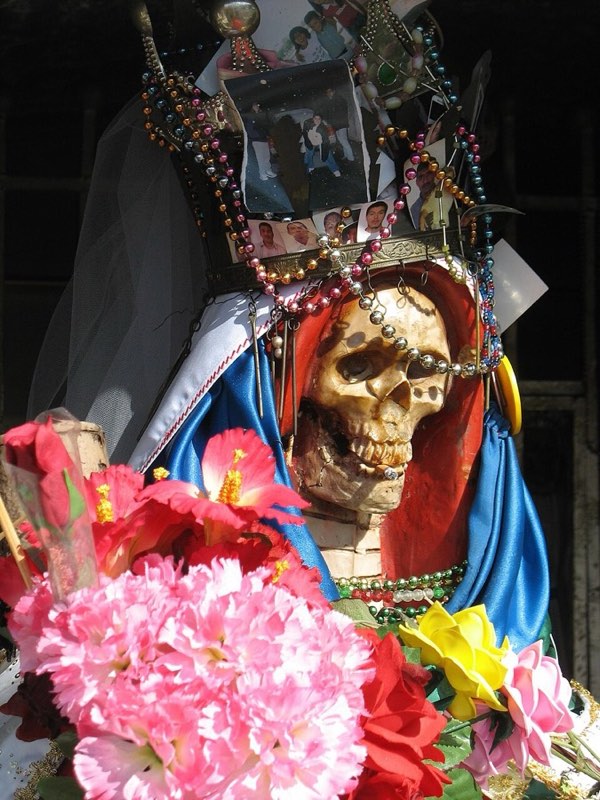
Enriqueta Romero's street shrine has received flowers, cigarettes and tequila for the skeleton saint since 2001, with a rosary at dusk on the first of each month. Tepito is the city's contraband market and not a place to wander: go in the afternoon with a guide from the neighbourhood, and keep the camera away. A folk saint the church condemns, who promises nothing except to be fair.
i
Alejandro Castañeda from Mexico DF, Mexico · CC BY 2.0 · source
Desierto de los Leones
Alone
Tuesday to Sunday · the forest above Santa Fe, 45 minutes
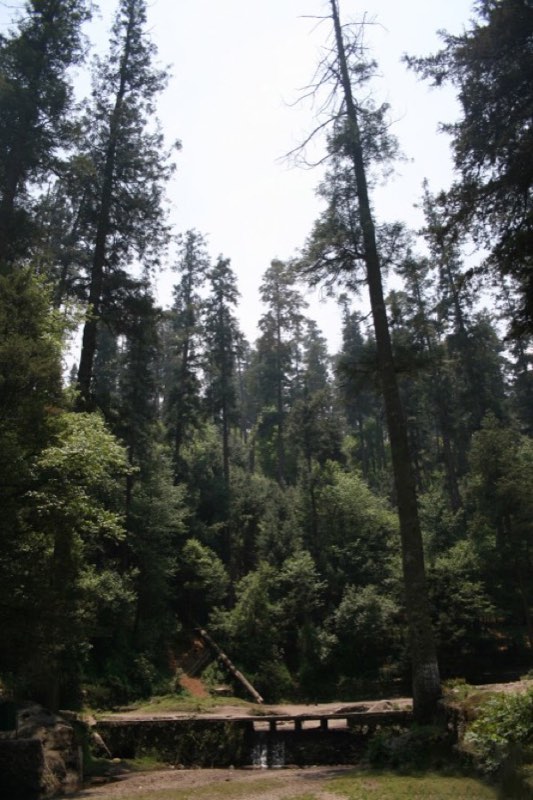
A Carmelite monastery of 1606, abandoned in the 1800s, stands in a fir forest at 3,000 m that is often in cloud by noon. Walk the loop of hermitages uphill in the morning, then eat quesadillas at the stalls by the gate. The monks chose this to be alone, and the forest still allows it.
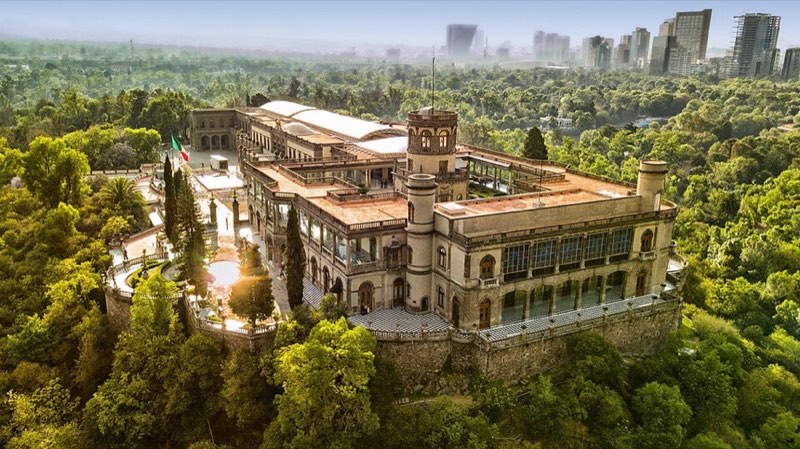
The only royal castle in the Americas, where Maximilian and Carlota lived from 1864 to 1867 and where six cadets died in 1847 holding the hill against the US army. Carlota's terrace garden looks straight down Reforma, which Maximilian laid out as his road to the palace. O'Gorman's and Siqueiros's murals are on the way in. Be at the gate at opening; by eleven it is school groups.
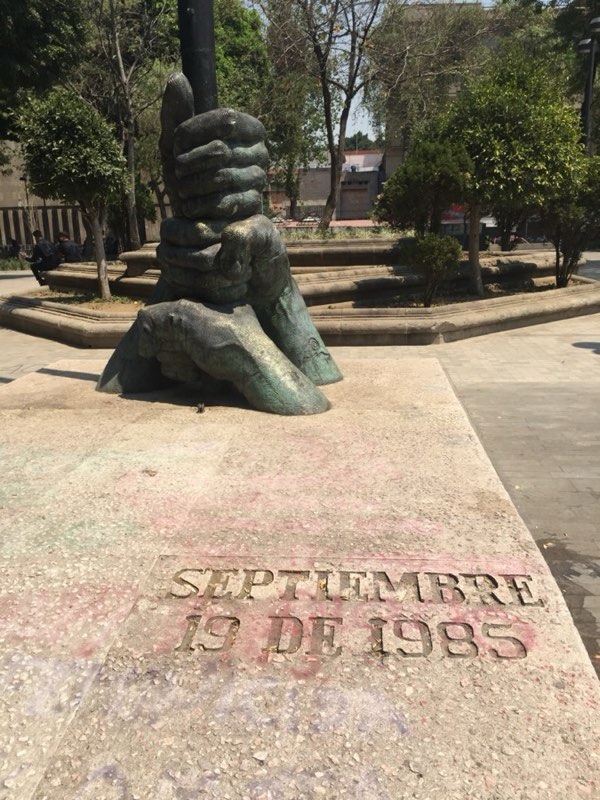
The 1985 earthquake killed at least 10,000 and the 2017 one, on the same day of the year, 19 September, killed 370 more. Plaza de la Solidaridad on the Alameda stands where the Hotel Regis fell; Roma and Condesa carry plaques on the corners where buildings came down. A drill empties every office in the city each 19 September. The thought: both times neighbours dug people out before the state arrived, and the city still organises itself on that memory.
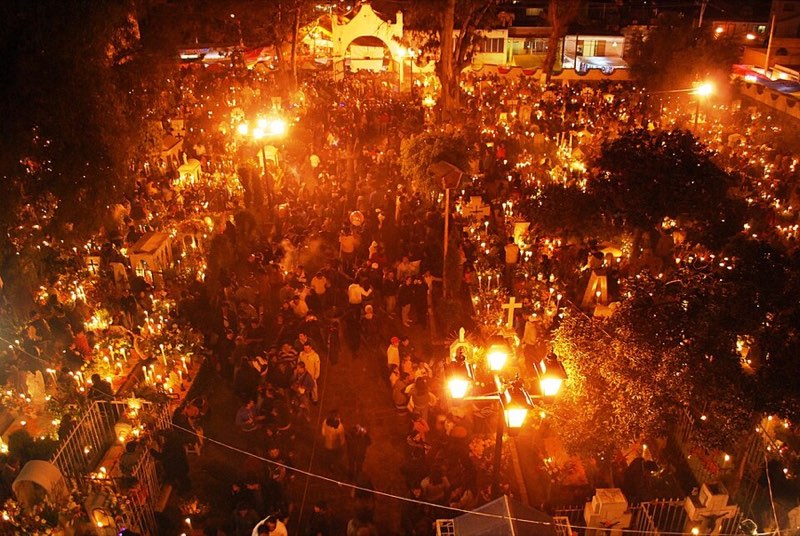
The festival is intimate in cemeteries and a spectacle on Reforma; choose one. Intimate: the night vigil in the cemetery of San Andrés Mixquic on 2 November, or the more local one at San Gregorio Atlapulco in Xochimilco, with candles on every grave. Spectacle: the giant offering in the Zócalo and the parade, invented in 2016 after a Bond film pretended one existed. Between them, the offering at Anahuacalli, built by Rivera's museum every year, is the finest in the city.
Walks for one and for two
The city makes sense on foot between eight and eleven in the morning, before the light flattens and the traffic thickens. Each walk takes two to three hours and most end at a table. The pin marks where each one starts.
i
Secretaría de Cultura Ciudad de México · CC BY-SA 2.0 · source
The Centro at dawn
Alone
6:00 to 9:00 · starts at the Zócalo
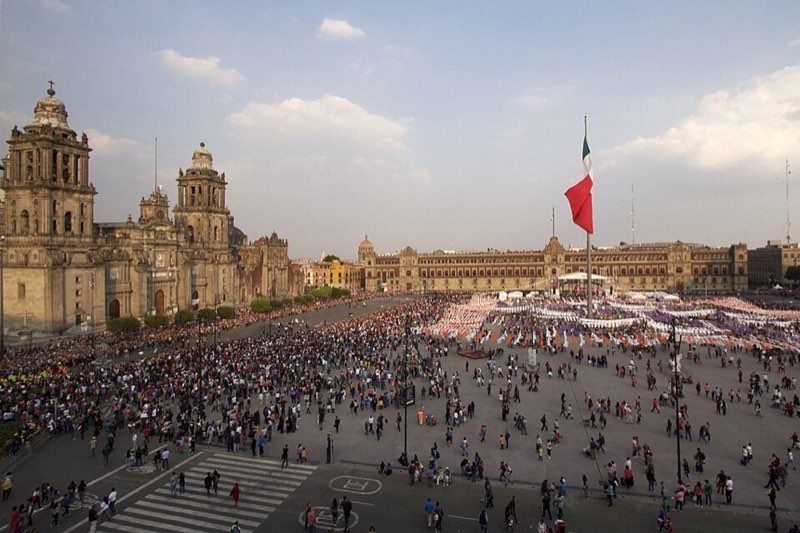
Be in the Zócalo at six for the flag-raising, soldiers and drums in an empty square. Walk east along Moneda past the archbishop's palace and the house where the first printing press in the Americas was set up in 1539, back along Guatemala beside the Templo Mayor to Plaza Santo Domingo, where the scribes are setting up. Coffee at Café El Popular on 5 de Mayo, which never closes, then Madero as the shutters go up. End with breakfast under Orozco's mural at the Sanborns in the Casa de los Azulejos. At that hour the Centro belongs to street sweepers and the devout.
The oval avenue was the track of the 1910 Condesa racecourse; a full lap is just over two kilometres under jacarandas, purple in March and April, past art deco apartment blocks. Parque México in the middle has the pergola, the fountain and the dog school. Finish at the Edificio Basurto on Avenida México, the 1945 deco tower with the spiral stair, which the porter will sometimes let you see. Breakfast at Lardo or coffee at Chiquitito. A horse track that became the shape of a neighbourhood.
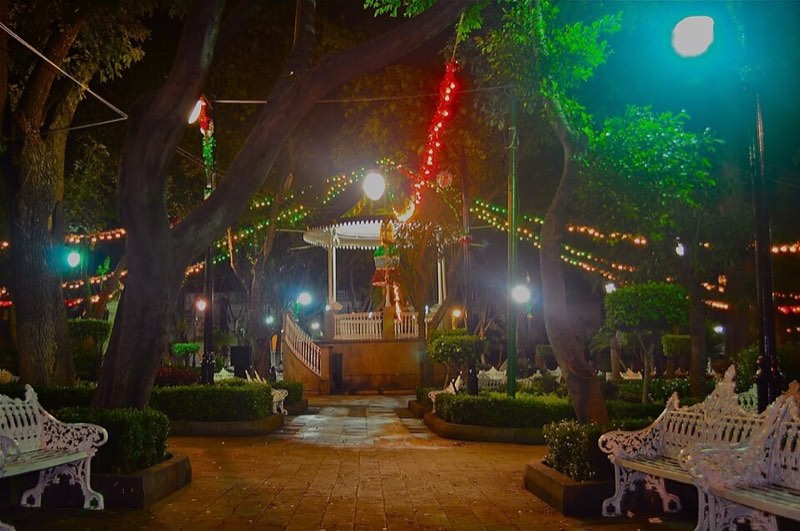
The most beautiful colonial street in the city, from the tiny chapel of San Antonio Panzacola by the bridge, past Casa Alvarado and its sound garden, to the Jardín Centenario with the coyote fountain and the 16th-century parish church. Detour to the Mercado de Coyoacán for tostadas. In the morning do the Viveros instead, the tree-nursery park where the city runs. Cortés lived here while Tenochtitlan was being taken apart.
morning, by car and on foot · starts at Plaza de las Fuentes
Barragán's 1940s suburb on the lava came with rules: the rock and the plants stay, the houses hide behind walls. Walk Avenida de las Fuentes, the Plaza de las Fuentes with Goeritz's snake, and the Fuente de los Patos; a few houses by Max Cetto and Francisco Artigas survive behind their walls. There is little to see, which is the point. Lunch at Tetetlán; Cuicuilco is ten minutes away.
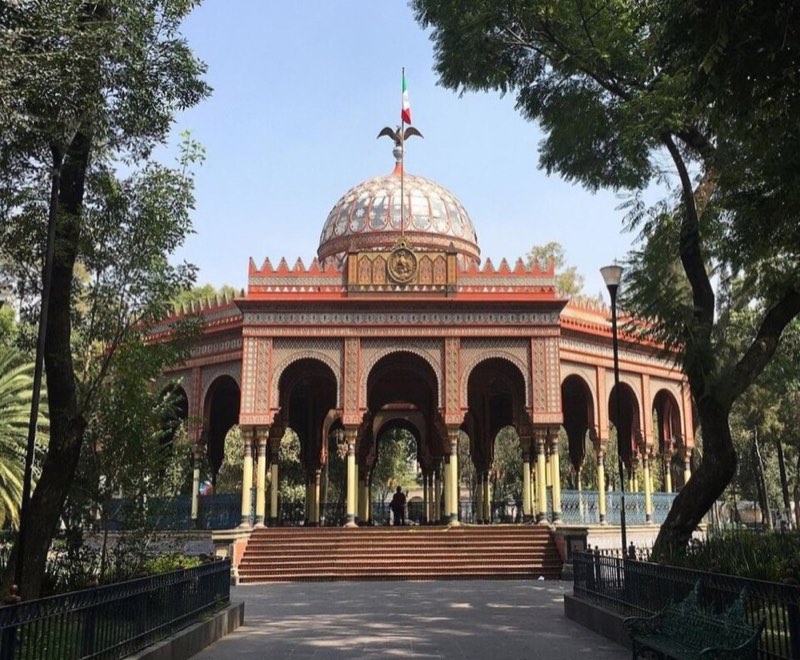
An 1880s neighbourhood that stayed working-class and intact: the Moorish kiosk built for the 1884 New Orleans World's Fair and moved here in 1910, the Museo de Geología across from it, the Chopo museum, old pulquerías, and the Biblioteca Vasconcelos ten minutes away. Casa Wabi Sabino is five blocks north.
Saturday 10:00 to 14:00 · starts at Plaza San Jacinto
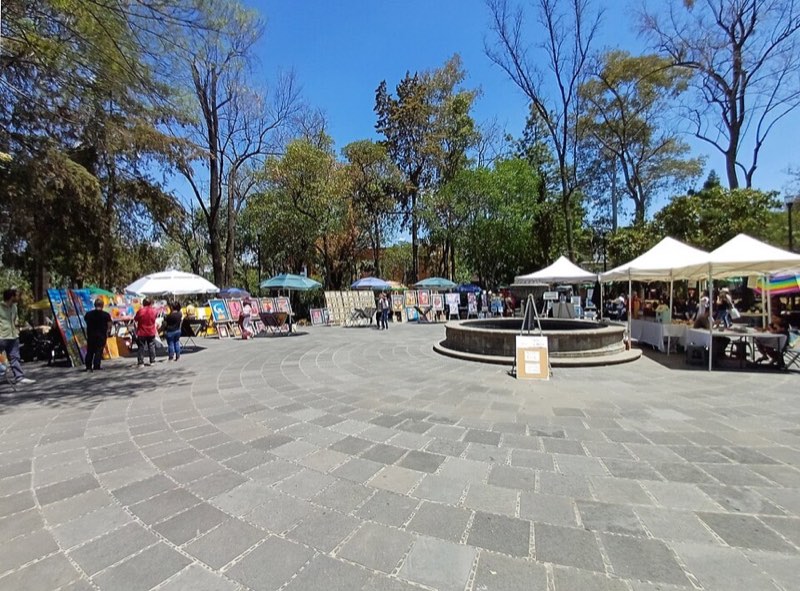
The Bazar Sábado has filled a 17th-century house on Plaza San Jacinto with craftspeople every Saturday since 1960, with painters in the square outside. Casa del Risco and the Museo de El Carmen are on the same square, the cobbled Calle Amargura runs behind, and the Rivera-Kahlo studios are ten minutes downhill. Lunch at the San Ángel Inn or at a fonda off the square. A village the city swallowed, still a village on Saturdays.
La Lagunilla on Sunday
Together
Sunday 9:00 to 13:00 · starts at the market
The antiques market spreads north of the Centro along Rayón and Comonfort: furniture, photographs, old magazines, uniforms, cameras, trash and treasure. Bargain, pay cash, keep valuables close, and drink a michelada at noon. The city selling its own past to itself.
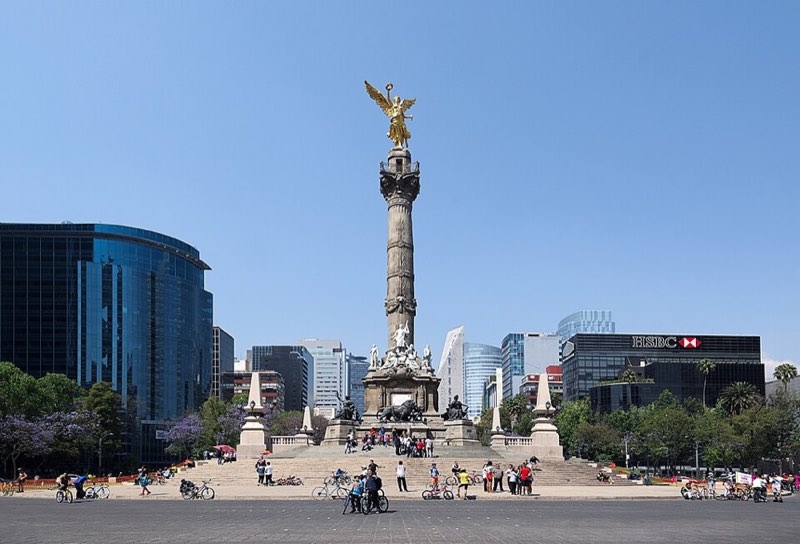
The avenue closes to cars from the Centro to Chapultepec and beyond. Rent an Ecobici through the app or borrow hotel bicycles, ride from the Angel to the Diana and on to the Monumento a la Revolución, and stop at the Sunday painters' market in the Jardín del Arte Sullivan. A Habsburg boulevard built for carriages, used once a week as intended.
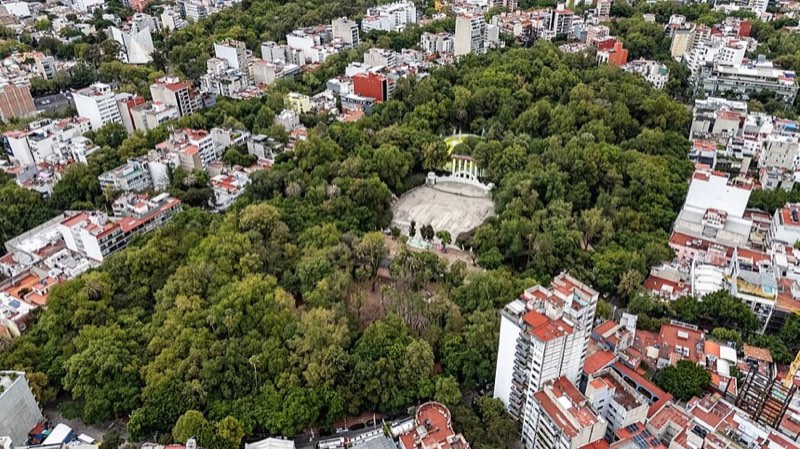
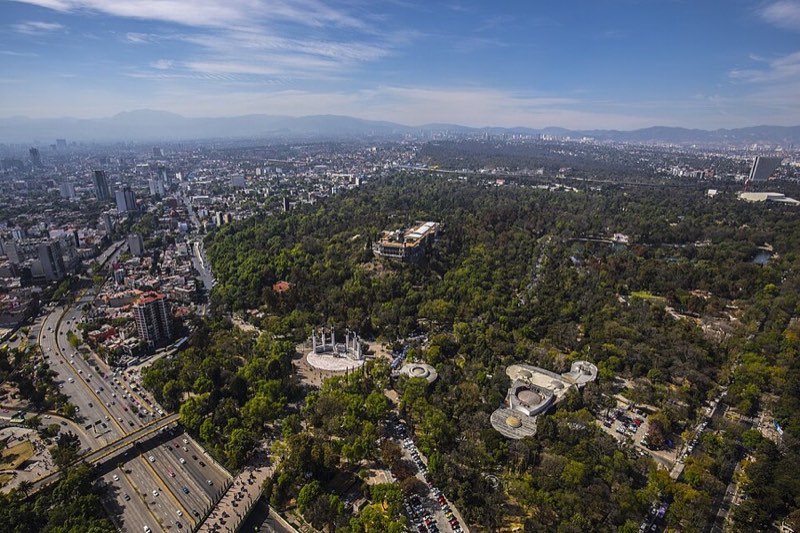
Less visited than the castle side: the Cárcamo de Dolores and its Tláloc fountain, the natural history museum's domes, the big lake with Lago/Algo, the Xochipilli fountain, and the Rotonda next door. Lunch at Lago. The whole forest is larger than Central Park, and the city uses it as its living room.
A provincial town inside the city: colonial arcades on the plaza, the Casa Chata, the 1900 iron Mercado de la Paz with excellent fondas, and the Capuchinas chapel from the first section on Hidalgo street. Fuentes Brotantes, a small forest park with a spring, is a short taxi ride uphill.
Tables worth thinking at
A starred dining room and a street counter can both be the most interesting meal of a day here, and the second often wins. Book the first group weeks ahead; walk into the rest. Star counts are from the 2026 Michelin guide.
Rooms worth the booking
i
Nan Palmero from San Antonio, TX, USA · CC BY 2.0 · source
Pujol
Polancotwo stars
Enrique Olvera's mole madre, a sauce kept alive and re-fed since 2013, is served beside a young mole on the same plate: the most thoughtful dish in the country. Two people should ask for the taco counter.
Quintonil
Polancotwo stars
Jorge Vallejo and Alejandra Flores cook from the chinampas, and the room sits in the top ten of the world lists most years. Lunch is easier to book than dinner.
Rosetta
Romaone star
Elena Reygadas, named the world's best female chef in 2023, cooks herb-led plates in a Roma mansion; her bakery around the corner does the morning.
Máximo Bistrot
Romaone star
Eduardo García was deported from the United States as a young cook and came back to a daily market menu and an open kitchen.
Em
Romaone star
Lucho Martínez's counter tasting, Asian technique on Mexican ingredients.
Sud 777
Pedregalone star
Edgar Núñez in a garden on the lava; pair it with Casa Pedregal.
Esquina Común
Romaone star
A small set menu in a corner house, the most intimate of the starred rooms.
Expendio de Maíz
Romaone star
No menu and no sign; the cooks hand you whatever corn dish is coming off the comal, and you pay cash. Proof that a tortilla counter can earn a star.
Gaba
Condesaone star, new in 2026
One of the city's two new one-star rooms in 2026.
La Once Mil
Lomas de Chapultepecone star, new in 2026
The other new one-star room of 2026.
Baldío
Condesa
The zero-waste restaurant run by the Arca Tierra farm; you eat the chinampa you visited at dawn.
Nicos
Azcapotzalco
Gerardo Vázquez Lugo's family restaurant since 1957 revives recipes from archives; lunch only, far north, worth the taxi.
Masala y Maíz
Juárez
Norma Listman and Saqib Keval cook Mexico, India and East Africa together and run the kitchen on fair-labour terms; the argument is on the plate.
Azul Histórico
Centro
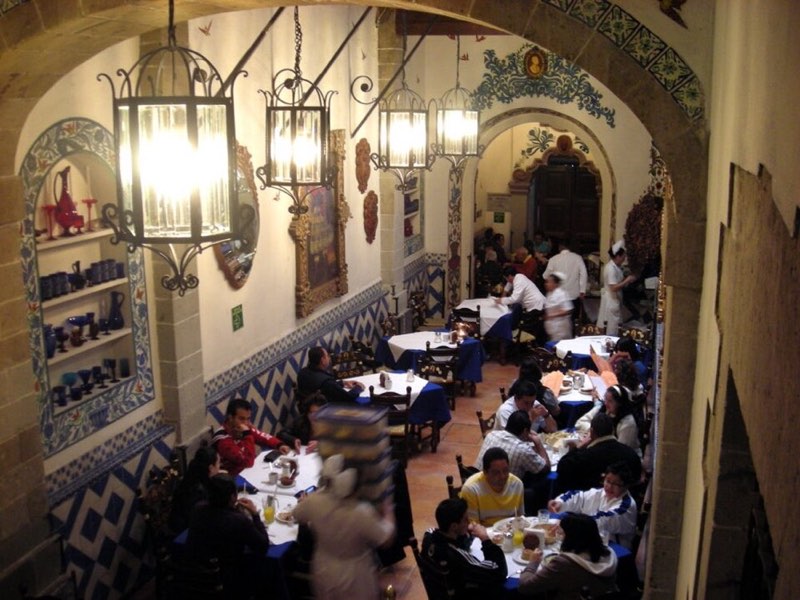
Ricardo Muñoz Zurita, who wrote the encyclopaedia of Mexican cooking, under trees in a palace courtyard.
Contramar
Roma
Lunch only, tuna tostadas and the red-and-green grilled fish, and the whole city at three in the afternoon.
Breakfasts with history
Fonda Margarita
Del Valle
Open from 5:30, shared tables, beans with egg and chicharrón in salsa, cash; the pre-dawn city eats here.
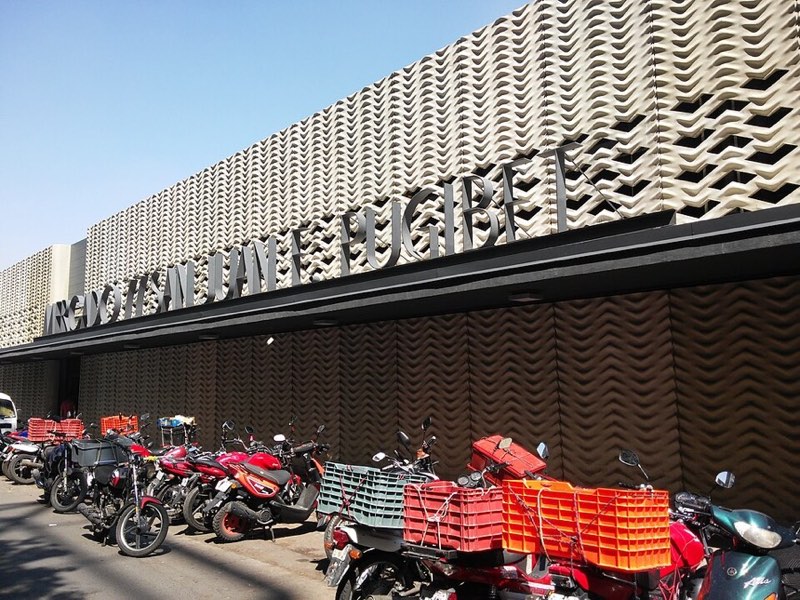
The chefs' market, insects and all; the La Jersey cheese stall pours wine and hands you bread.
i
Carlos Adampol Galindo from DF, México · CC BY-SA 2.0 · source
Mercado de Jamaica
Jamaica
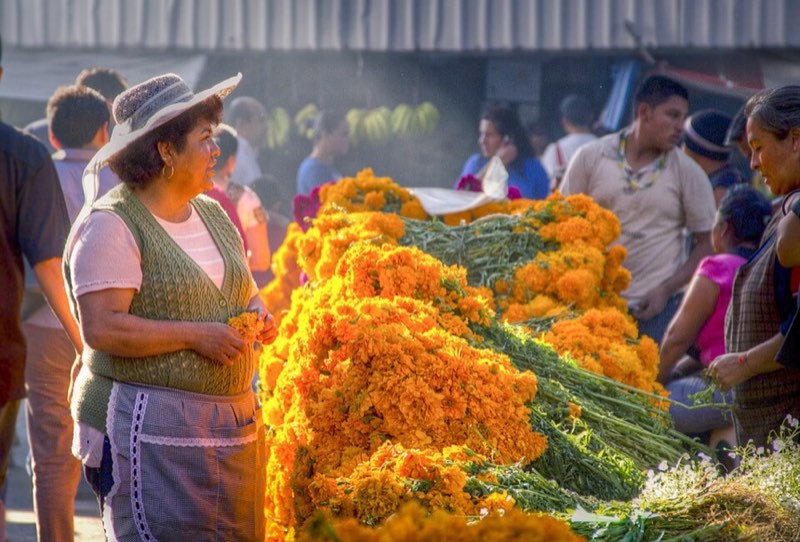
Flowers at dawn, and all night before the Day of the Dead and Mother's Day on 10 May.
Churrería El Moro
Centro
The 1935 original on the Eje Central, open very late.
Cantinas, pulque, mezcal, cocktails
La Ópera
Centro
The 1895 bar with a bullet hole in the ceiling attributed to Pancho Villa.
Tío Pepe
Centro
The city's oldest cantina, from 1870, unchanged.
Salón Covadonga
Roma
A Spanish-émigré cantina from the 1940s where the art crowd plays dominoes.
Pulquería Las Duelistas
Centro
Fruit-cured pulque, the pre-Hispanic drink, under psychedelic murals beside the San Juan market.
Bósforo
Centro
No sign, dark, and the most serious mezcal list in the city, on Luis Moya from 19:00 Tuesday to Thursday and 18:00 Friday and Saturday.
Tlecān
Roma
A mezcal tavern built like a shrine, on the world bar lists.
Handshake Speakeasy
Juárez
Named the world's best bar in 2024. With Licorería Limantour in Roma and Rayo in Roma, the cocktail rooms that top the world rankings. Hanky Panky in Juárez is entered through a taquería's fridge door.
Licorería Limantour
Roma
The long-running number one on Mexico's bar lists.
Coffee
Café Nin
Juárez
The Rosetta family's café in Juárez.
Quentin and Almanegra
Roma
Two of Roma's serious coffee counters.
Chiquitito
Condesa
The Condesa counter by the park.
Café Avellaneda
Coyoacán
Seats six. Café de Nadie in Roma turns into a listening bar after dark.
Beyond the city
Five day trips repay the drive; the first is obligatory and the last is a pilgrimage. Hire a car with a driver for the day through the hotel, since the cost is small against the hours it saves.
daily 9:00 to 17:00; book the balloon or the driver · 50 km north-east, about an hour
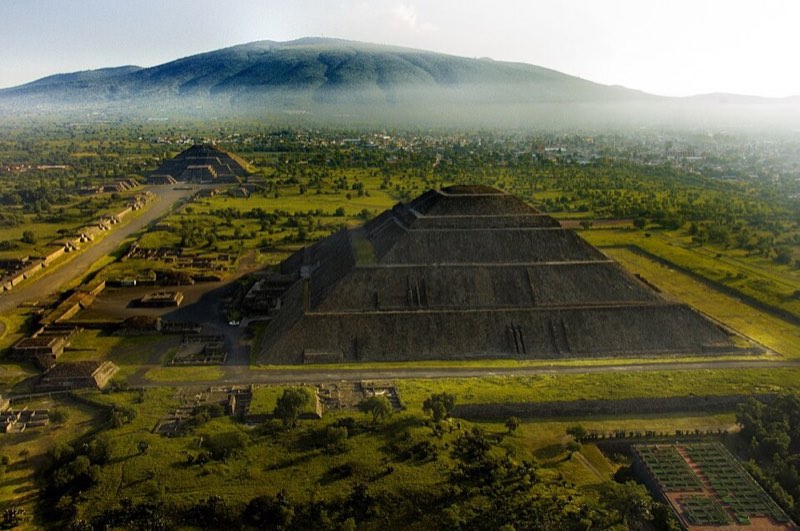
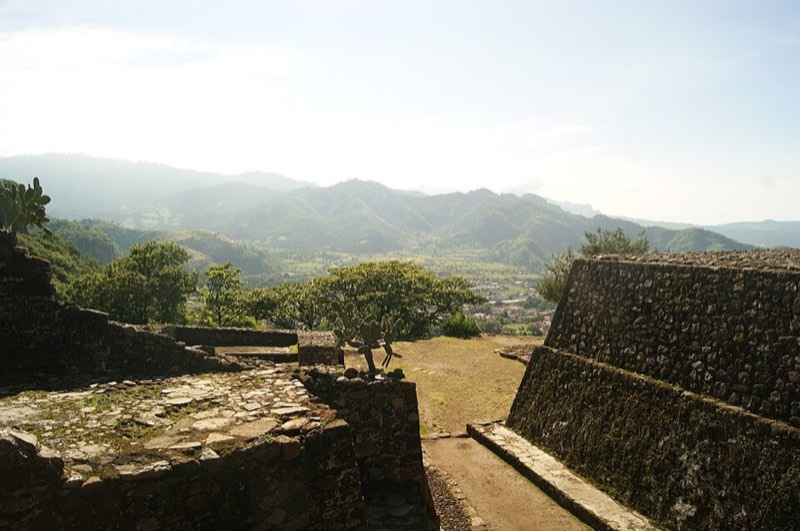
The rules first: climbing the Pyramid of the Sun has been banned since 2020, the Moon's lower platform opens only at times, and climbers are fined. So the point is the ground. Be at the gate at nine, start at the Temple of the Feathered Serpent with its carved heads, and walk the Avenue of the Dead end to end, about two kilometres. Then leave the fenced zone for the residential compounds of Tetitla and Tepantitla, where the painted paradise of the rain god, with its swimmers and singing figures, survives on the walls and almost nobody goes.
The balloons lift at dawn from fields beside the site and are the only way to see the plan: an avenue set 15.5 degrees east of north, aligned to the sun. Book a week ahead, fly, then enter at opening. On the way home, stop at the 1539 Augustinian monastery at Acolman. A city of over 100,000 people in the year 400, whose builders' name is lost; the Aztecs found it in ruins and called it the place where the gods were made.
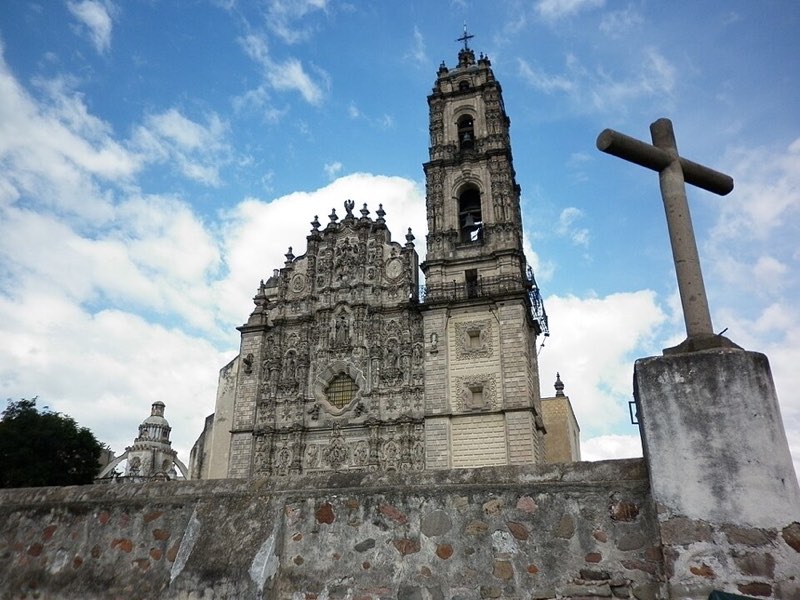
The Jesuit college of San Francisco Javier is now the national museum of the colonial era, and its church is the most intense baroque interior in the Americas: a Churrigueresque façade, gilded altarpieces to the roof, and the octagonal gold chamber of the Virgin behind them. The Jesuits finished it in 1762 and were expelled from the empire in 1767. Lunch on the plaza. The mammoth museum at the airport is 25 km east.
any day but Sunday · 75 km south, an hour and a half
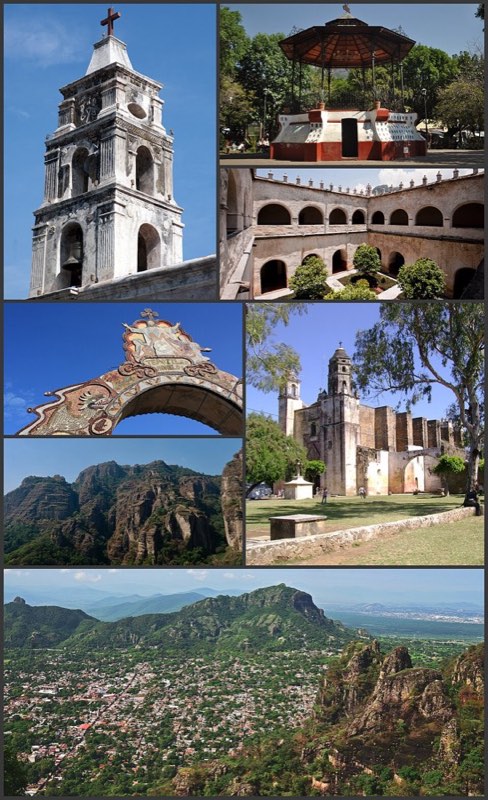
A town under cliffs. Climb the steep stepped path, about ninety minutes, to the Tepozteco, a small Aztec temple to the pulque god on the cliff edge, then come down to the 16th-century Dominican convent with its murals. The market sells ices in flavours like cactus and rose petal. Stay a night if you can; the cliffs at dusk are the reason.
Tuesday to Sunday · 115 km south-west, two and a half hours
The Cuauhcalli, the house of the eagle and jaguar warriors, was carved from the living rock of the hill around 1500: a round chamber with eagle and jaguar seats cut from the stone, the only monolithic temple of its kind in the Americas, 400 steps up. Below it the Augustinian monastery of 1540 has cloister murals of a paradise garden painted by indigenous artists with local birds and plants, glyphs hidden among them. Two religions' gardens, one above the other, with few visitors.
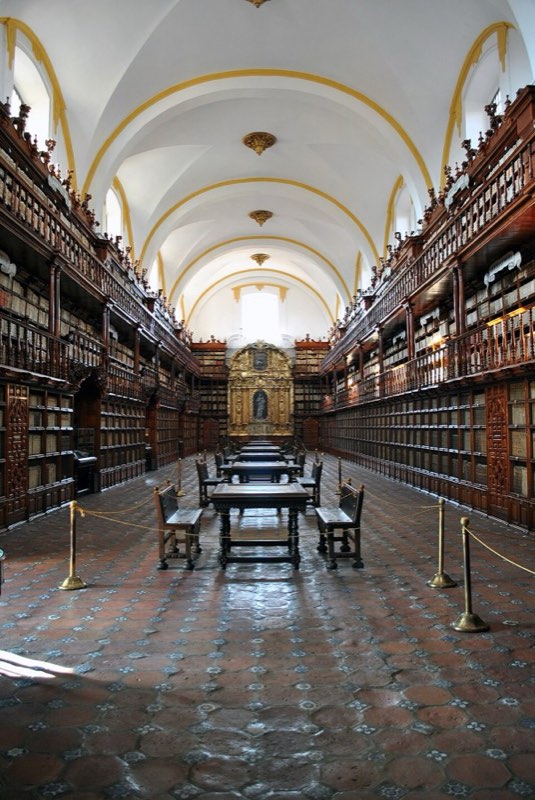
The Biblioteca Palafoxiana of 1646 was the first public library in the Americas and still has its cedar shelving; the Capilla del Rosario is a gold cave of 1690 baroque; Toyo Ito's Museo Internacional del Barroco is open Tuesday to Sunday 10:00 to 19:00. In Cholula, the largest pyramid in the world by volume is now a grassy hill with a church on top and tunnels inside. The Spanish built on top, literally, and the hill is still there.
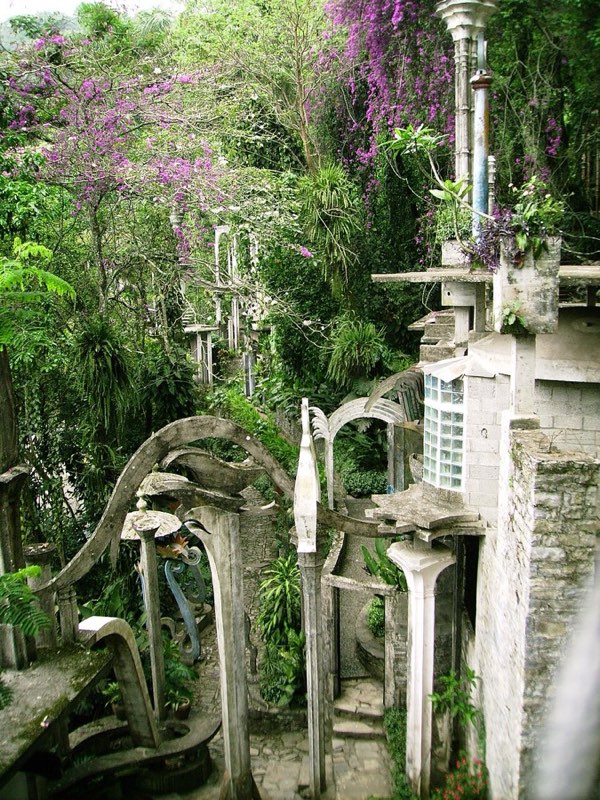
Edward James built Las Pozas between 1949 and 1984 with a local crew: concrete stairways to nowhere, columns and follies rising out of rainforest and waterfalls. There is no quick way; drive through Querétaro and the Sierra Gorda, whose Franciscan missions are a UNESCO site, and make it three days. The richest patron of surrealism built his only masterpiece in a Mexican jungle, and Leonora Carrington, from the Houses section, was his friend.
Practical
Four things decide a trip here: what you book before arriving, the altitude, Mondays, and how you move. Everything else is forgiving.
What to book, and how far ahead
Place
Lead time
How
Casa Luis Barragán
4 to 8 weeks; slots release monthly and sell out
casaluisbarragan.org
Pujol, Quintonil
4 to 8 weeks
their own sites
Casa Azul (Frida Kahlo)
2 to 4 weeks; take the first slot
museum site
Casa Gilardi
2 to 4 weeks
the family's site or email
Casa Pedregal
2 to 4 weeks
reservation on its site
Rosetta, Máximo, Em, Esquina Común
2 to 3 weeks
their own sites
Arca Tierra sunrise
1 to 2 weeks
arcatierra.com
Capilla de las Capuchinas
1 to 2 weeks
the convent by phone, 55 5573 2395
Casa Rivas Mercado
1 week; Saturday and Sunday at 10:00 and 12:00
visitas@casarivasmercado.com
Teotihuacan balloon
1 week
operators in San Juan Teotihuacan
Lecumberri
the monthly INAH programme
reservaciones@inah.gob.mx
Casa Leonora Carrington
write early; schedule unconfirmed
casaleonoracarringtonuam@gmail.com
Cuadra San Cristóbal
days; Tuesday to Saturday
online tickets
Palacio Nacional
same day from 10:00 at Moneda 4, or email ahead
Museo de Arte de la SHCP
Ballet Folklórico, lucha libre, Sala Nezahualcóyotl
days
box office or online
Altitude and season
The city sits at 2,240 m. Take the first day gently, drink water, and go easy on mezcal the first night. The dry season runs November to April: clear mornings, cold ones in December and January, jacarandas in March, haze and heat by May. The rains run June to October, with downpours most days between four and seven in the evening and the clearest mornings of the year; plan indoor afternoons. The best months are October, November, February and March.
Mondays and Sundays
Nearly every museum closes on Monday. The exceptions worth knowing: Museo Kaluz, Biblioteca Vasconcelos, Museo Soumaya, the Museo Vivo del Muralismo and the Estanquillo, which close on Tuesday instead. Sundays are free for residents, so the big museums are packed; use Sunday for Reforma by bicycle, La Lagunilla, a concert at noon, or Xochimilco.
Moving
Uber and DiDi are cheap and reliable; use them after dark and to any door this guide calls rough. The Metro is the fastest way into the Centro and worth riding once for the signs and the temple at Pino Suárez; avoid 7:00 to 9:30 and 18:00 to 20:00, keep the phone pocketed, and note the women-only cars at the front. The Metrobús runs the length of Insurgentes. Ecobici needs the app and a card. For days out, the hotel will arrange a car and driver for a flat day rate.
Money and the rest
Cash for markets, street counters, tips and taxis; cards everywhere else; take cash from ATMs inside banks. Tip 10 to 15 percent. Do not drink tap water; restaurants filter. The earthquake alarm gives about a minute's warning; when it sounds, follow the people around you out to the street. Pickpockets work the Metro and crowds; violence against visitors in Roma, Condesa, Polanco, Coyoacán and the daytime Centro is rare.
Beds that are places in themselves
Círculo Mexicano
Centro
Shaker-plain rooms by Ambrosi Etchegaray in the 19th-century house where the photographer Manuel Álvarez Bravo was born, with a roof pool facing the cathedral domes. The dawn walk starts at the door.
Downtown Mexico
Centro
A 17th-century palace with Azul Histórico in its courtyard.
Octavia Casa
Condesa
Seven quiet rooms around a courtyard, by the designer Roberta Maceda.
Ignacia Guest House
Roma
A 1913 house named for the housekeeper who ran it for seventy years, with rooms by colour.
Condesa DF
Condesa
A 1928 building with India Mahdavi interiors and a roof terrace over the park.
Casa Polanco
Polanco
A 1940s mansion with nineteen rooms, ten minutes' walk from the Chapultepec museums.
La Valise
Roma
Three suites; in one, the bed rolls out onto the terrace on rails.
Itineraries
Two shapes that work. Each day has one serious morning, a long lunch, something light after four, and an evening with a plan. Swap freely; Mondays and the booked slots are the only fixed points.
Three days alone
Day 1
The Centro
Zócalo at six for the flag; Templo Mayor at opening; the cathedral pendulum; the Museo Vivo del Muralismo. Lunch at Azul Histórico. After: Vlady's murals in the Lerdo de Tejada library and the meteorites at Minería. Evening: Bósforo, then Zinco if it is Wednesday to Saturday.
Day 2
The south
Your Casa Luis Barragán slot in Tacubaya, then Kurimanzutto and the Galería de Arte Mexicano on foot. Car to Cuicuilco, lunch at Tetetlán, Casa Pedregal if booked. The Espacio Escultórico at five. Evening: a concert in the Sala Nezahualcóyotl if it is Friday or Saturday, otherwise MUAC until it closes.
Day 3
Coyoacán
Anahuacalli at opening, then the Trotsky house. Tostadas at the Mercado de Coyoacán. The Francisco Sosa walk ending in the Fonoteca's sound garden. Evening: a film at the Cineteca in Xoco, or the Biblioteca Vasconcelos until it closes and dinner in Roma.
Four days together
Day 1
Chapultepec
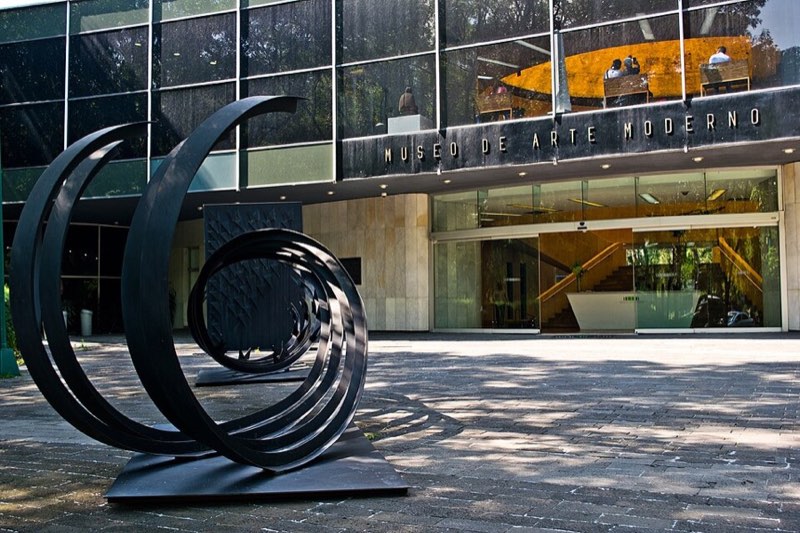
The castle at nine, the Audiorama after, then the Tamayo or the Museo de Arte Moderno. Lunch at Lago on the lake. The Cárcamo de Dolores and a walk through the Rotonda. Evening: the Ballet Folklórico if it is Wednesday or Sunday, otherwise Handshake.
Day 2
Water
Arca Tierra's sunrise breakfast on the chinampas at six, then the Museo Dolores Olmedo nearby. Rest. A booked afternoon slot at Casa Azul and the walk along Francisco Sosa. Dinner at Rosetta.
Day 3
Light and galleries
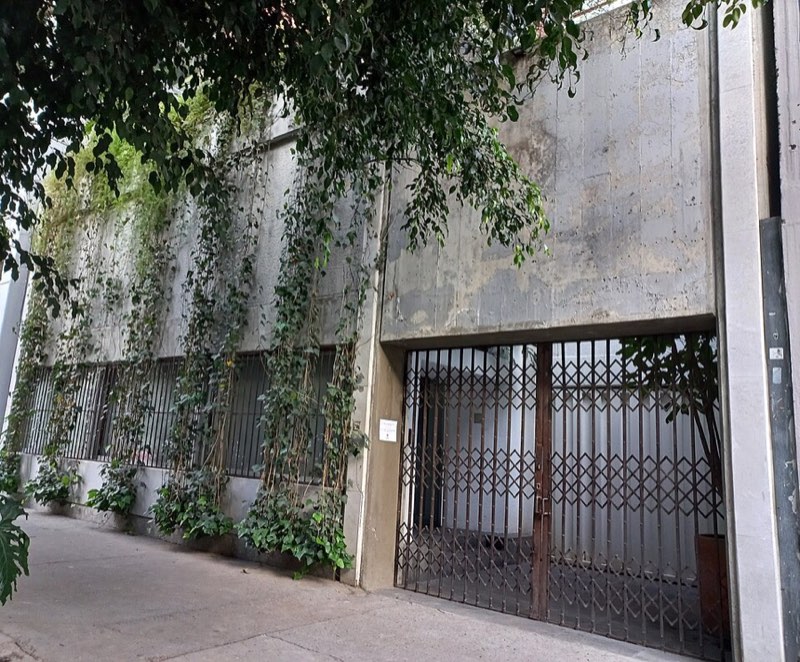
Casa Gilardi by appointment, then the San Miguel Chapultepec galleries. Lunch at Contramar. OMR, the Roma streets and the Museo del Objeto. Evening: danzón at Salón Los Ángeles if it is Tuesday, lucha libre at Arena México if it is Friday.
Day 4
Teotihuacan
A balloon at dawn, the avenue at opening, the murals at Tetitla and Tepantitla, Acolman on the way back. Late lunch at Nicos in Azcapotzalco, which is on the road home. Dinner at Pujol or Quintonil, booked weeks ago.
A rainy-afternoon list
For the four-to-seven downpours of June to October: the Museo Kaluz terrace under its awnings and Bellas Artes across the park; the writers' rooms in the Biblioteca de México; the Estanquillo; the toy museum; the Museo Franz Mayer's cloister café, two minutes from the Alameda; a cantina such as La Ópera; a film at either Cineteca; the café at the Librería Rosario Castellanos.